1 May 2026
Hoi An: Culture, arts and architecture
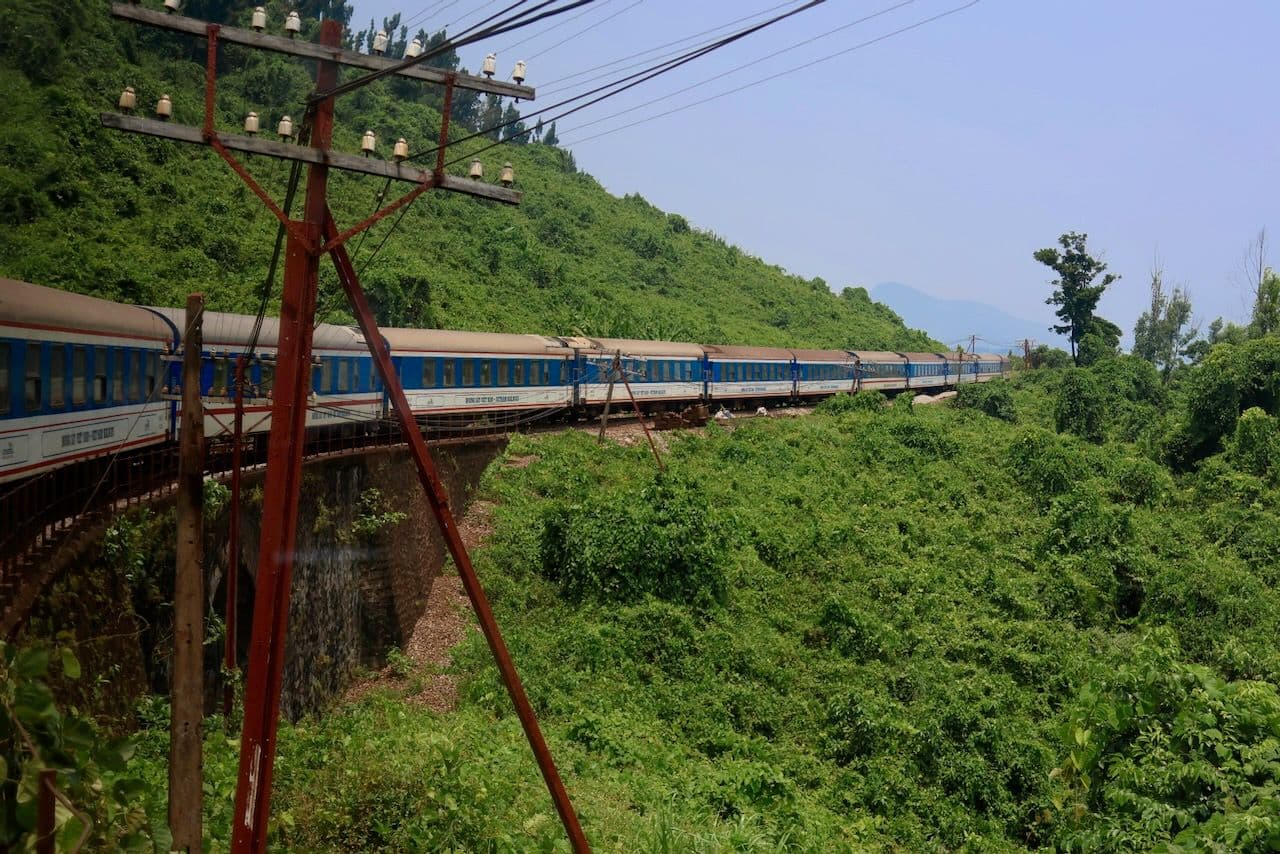
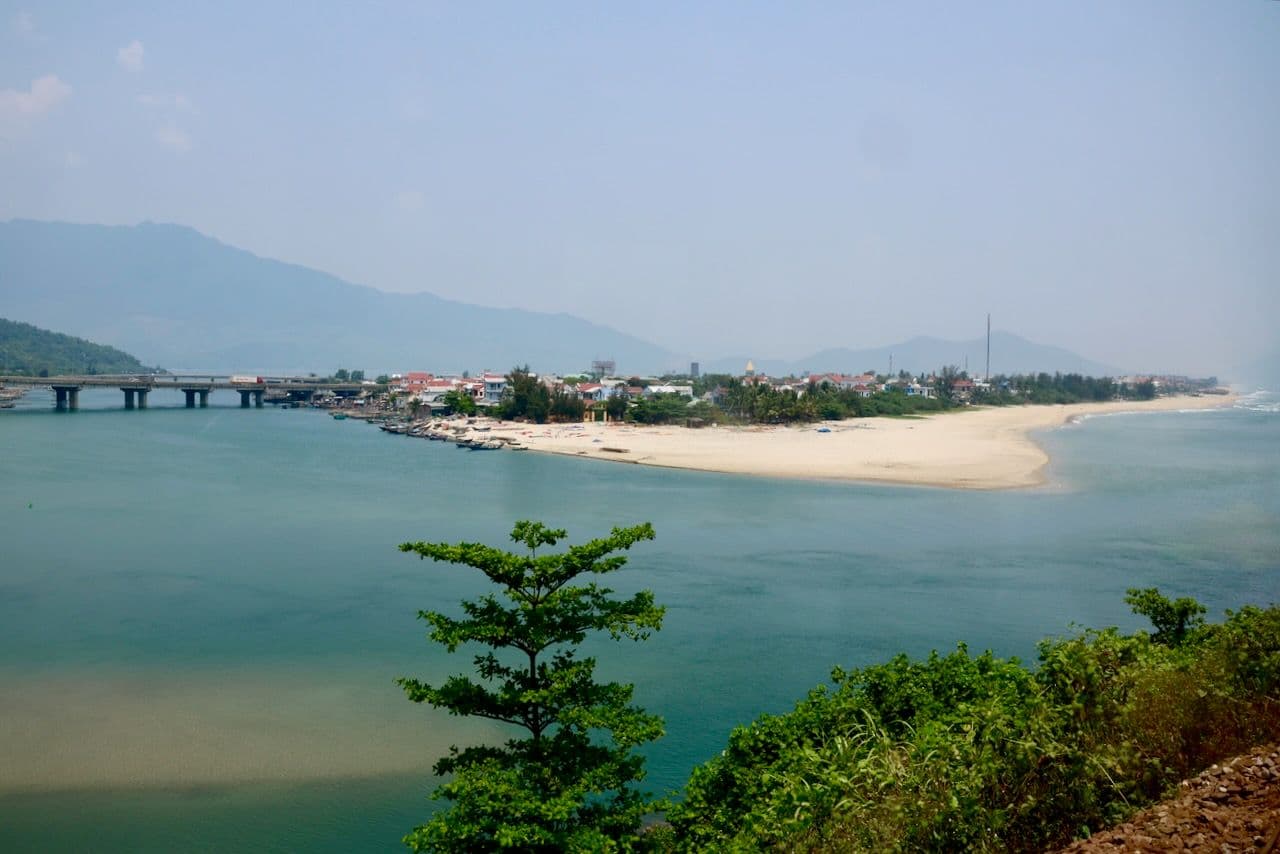
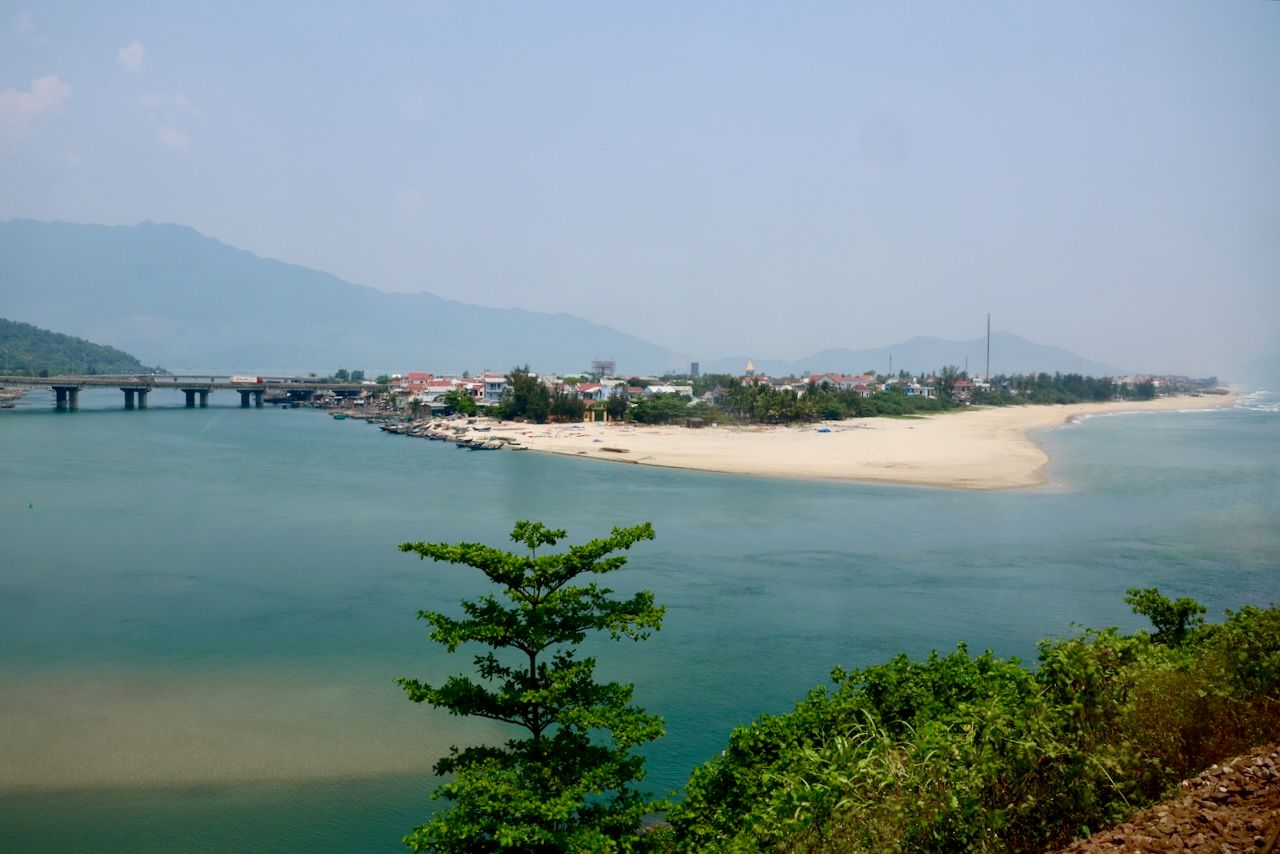
The journey to Hoi An was the first highlight of this part of the trip - taking the Reunification Express train from Hanoi to Da Nang; 17 hours through varying cities, countryside and finally wide open coastal views.
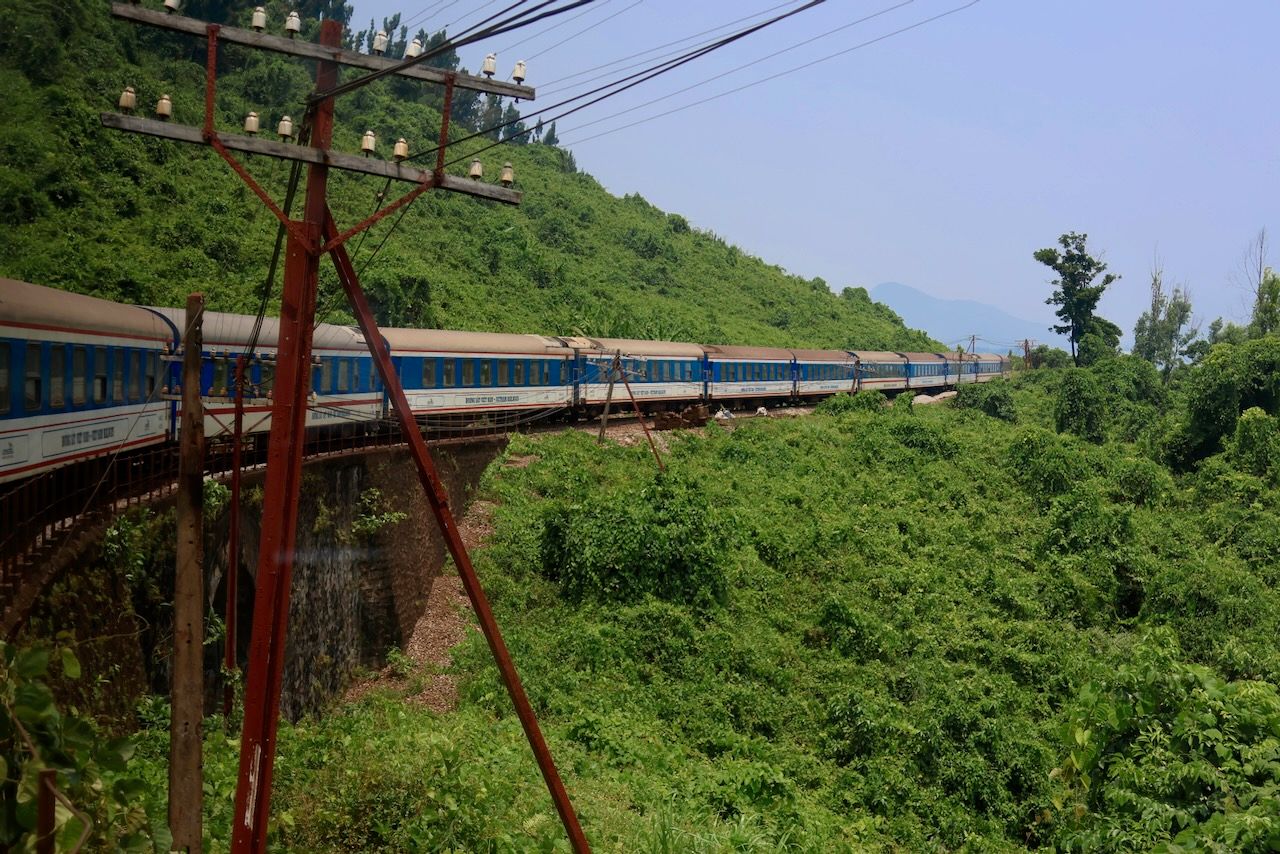
The room was relatively comfortable but sleep was nearly impossible with the rattling of the train over the century-old track. The front carriage hosted a restaurant, which provided the best view of the last hour into Da Nang along winding coastal track while enjoying a bowl of pho.
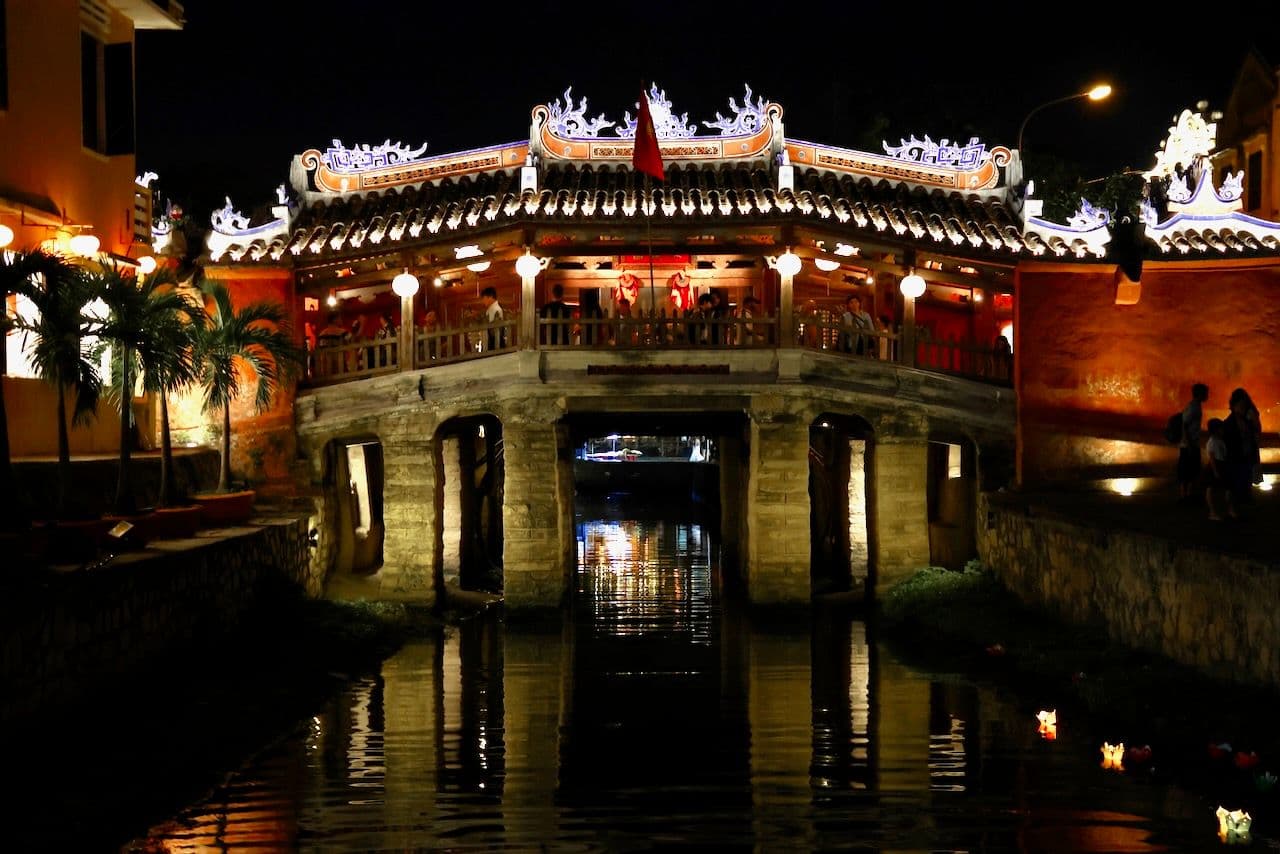
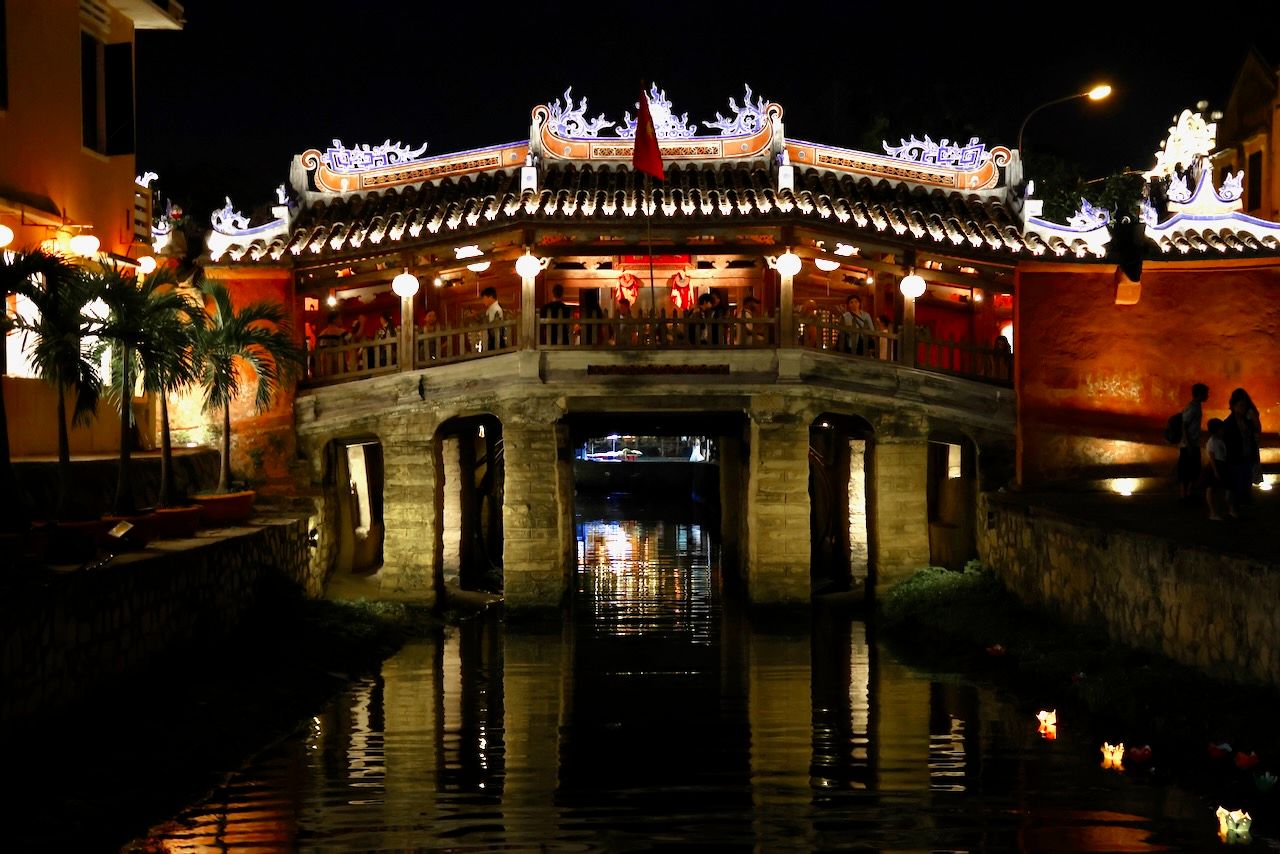
Hoi An is a city that blends influences from China, Japan and even Europe with Vietnamese culture, due to centuries of being a major trading port up until the 1800s. The most iconic symbol of this cross-culture mixture is the Japanese Covered Bridge, built by the Japanese merchant community from 1593-1595, to connect with the Chinese merchants across the canal and improve trade.
Since this is likely the most photographed spot in Hoi An, I thought I'd start with my take on it - this shot at night that captures the reflection in the canal, and has a few floating lanterns in the corner.
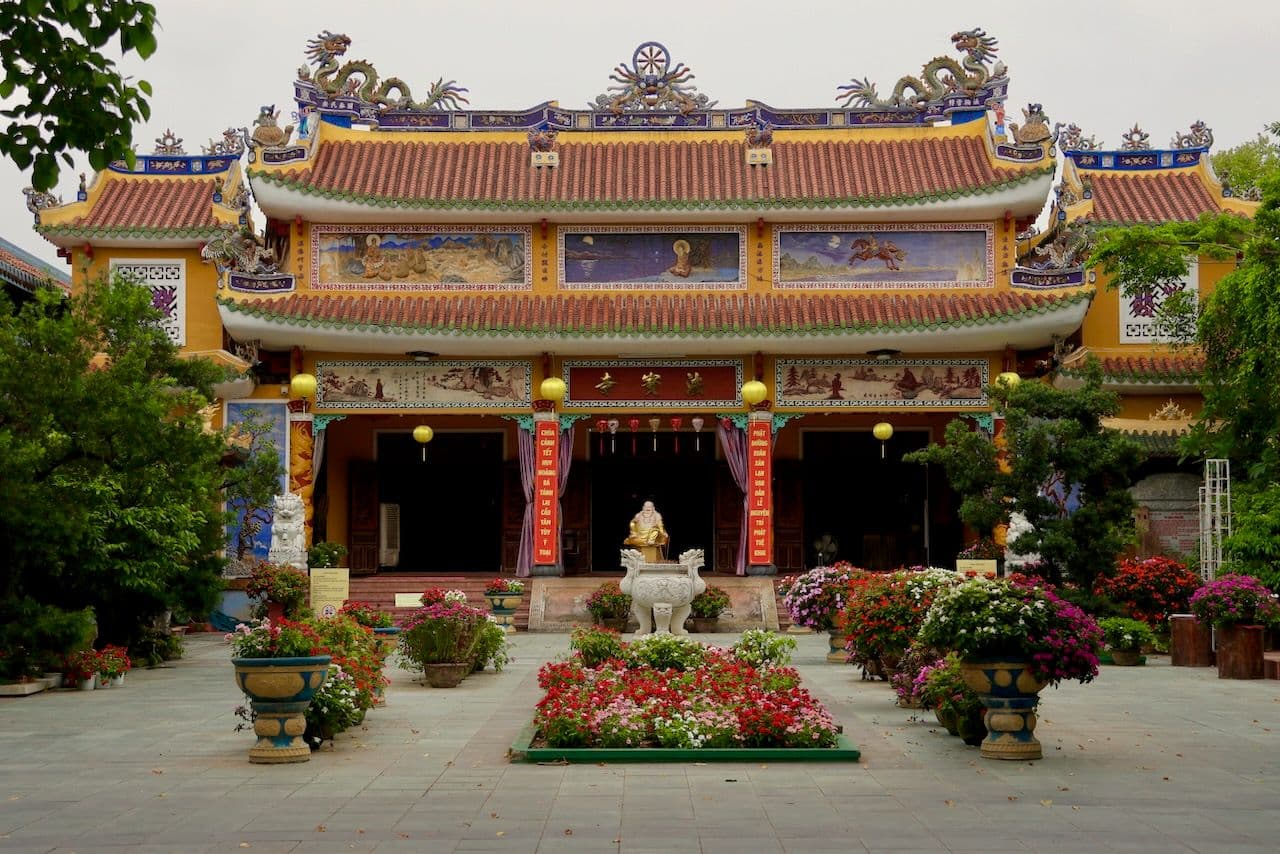
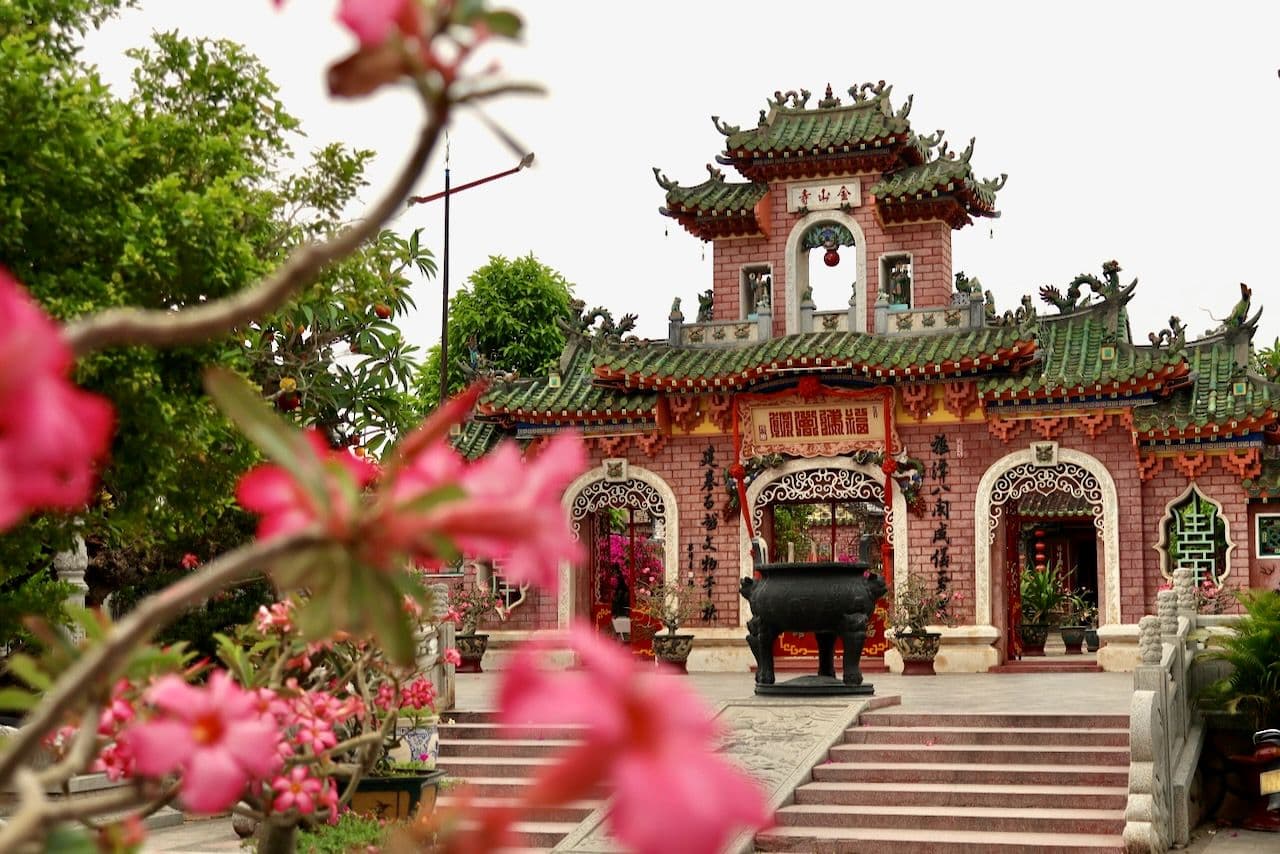
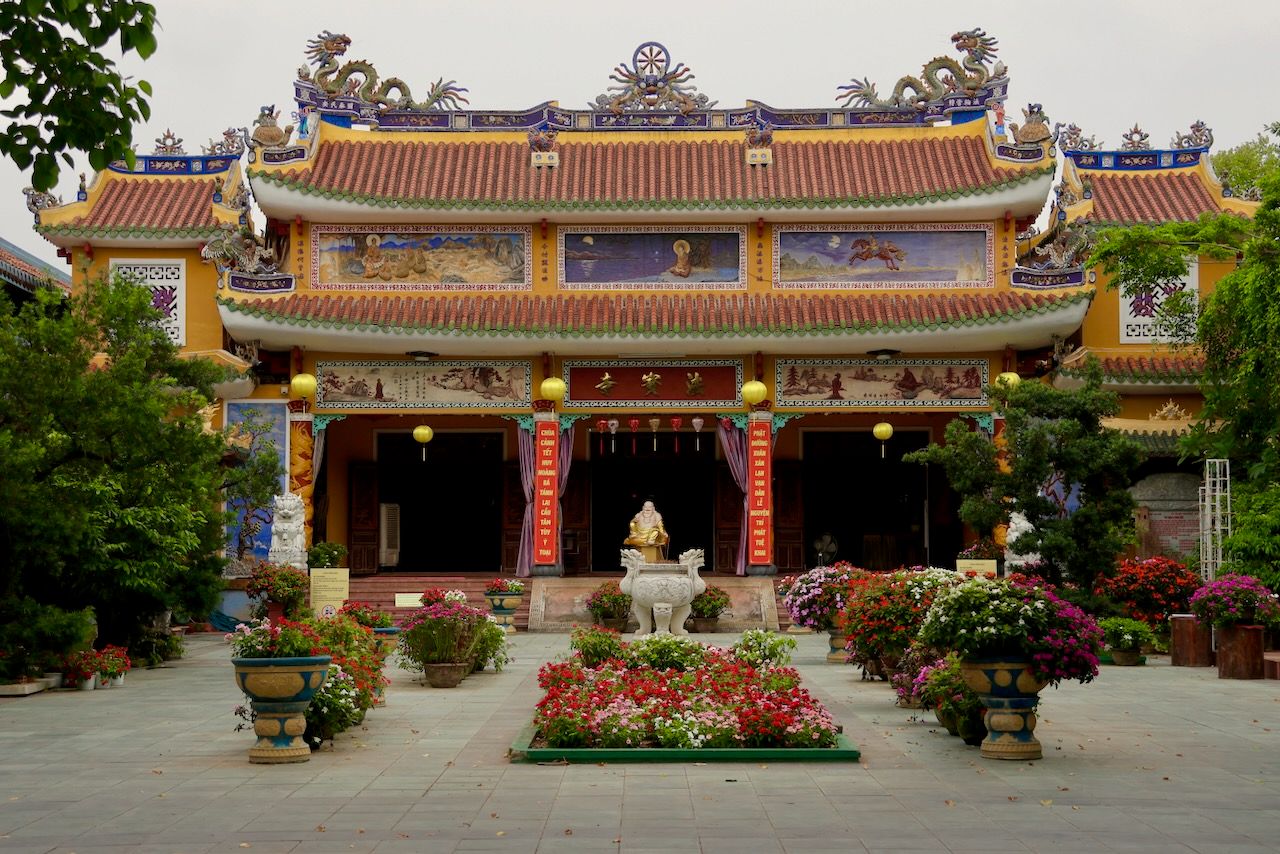
Walking through the streets of Hoi An, you see varying architecture everywhere. The Phap Bao Pagoda, a Buddhist temple, provided a particularly photogenic stop for Chinese architecture right in the heart of Hoi An Ancient City.
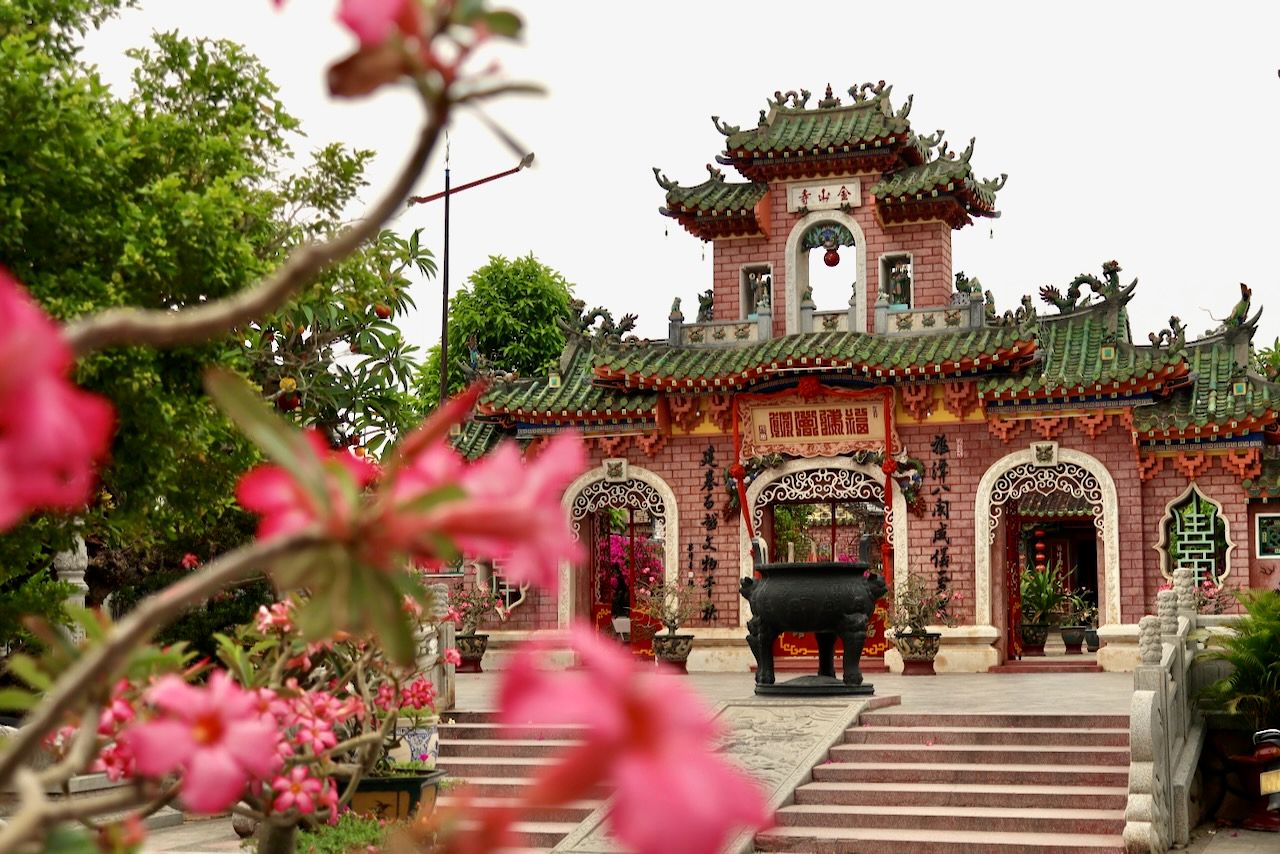
The symmetry of Hoi An's temples lends itself to a lot of straight-on photos. Passing the camera over to my secret director of photography (my wife), we got some more interesting angles, here of the Chinese Fujian Assembly Hall.
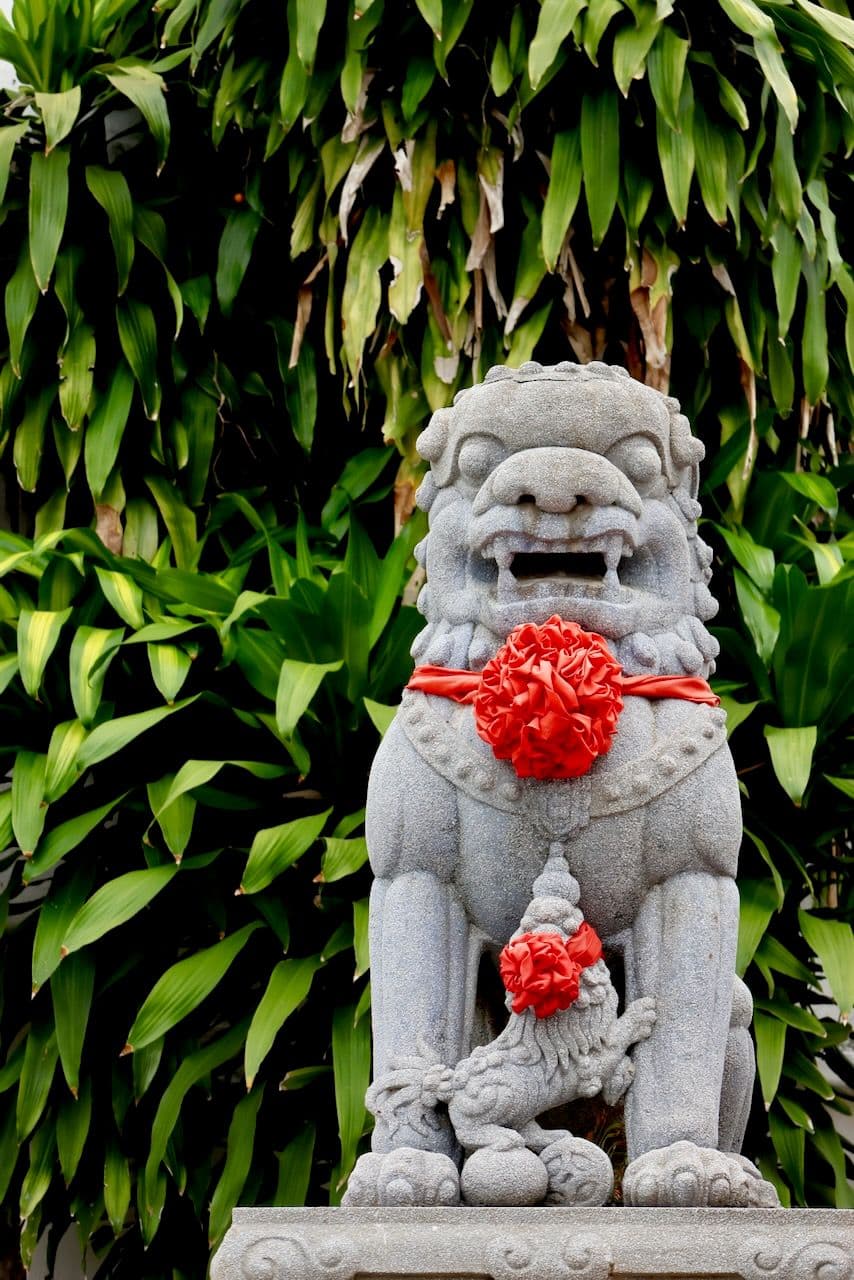
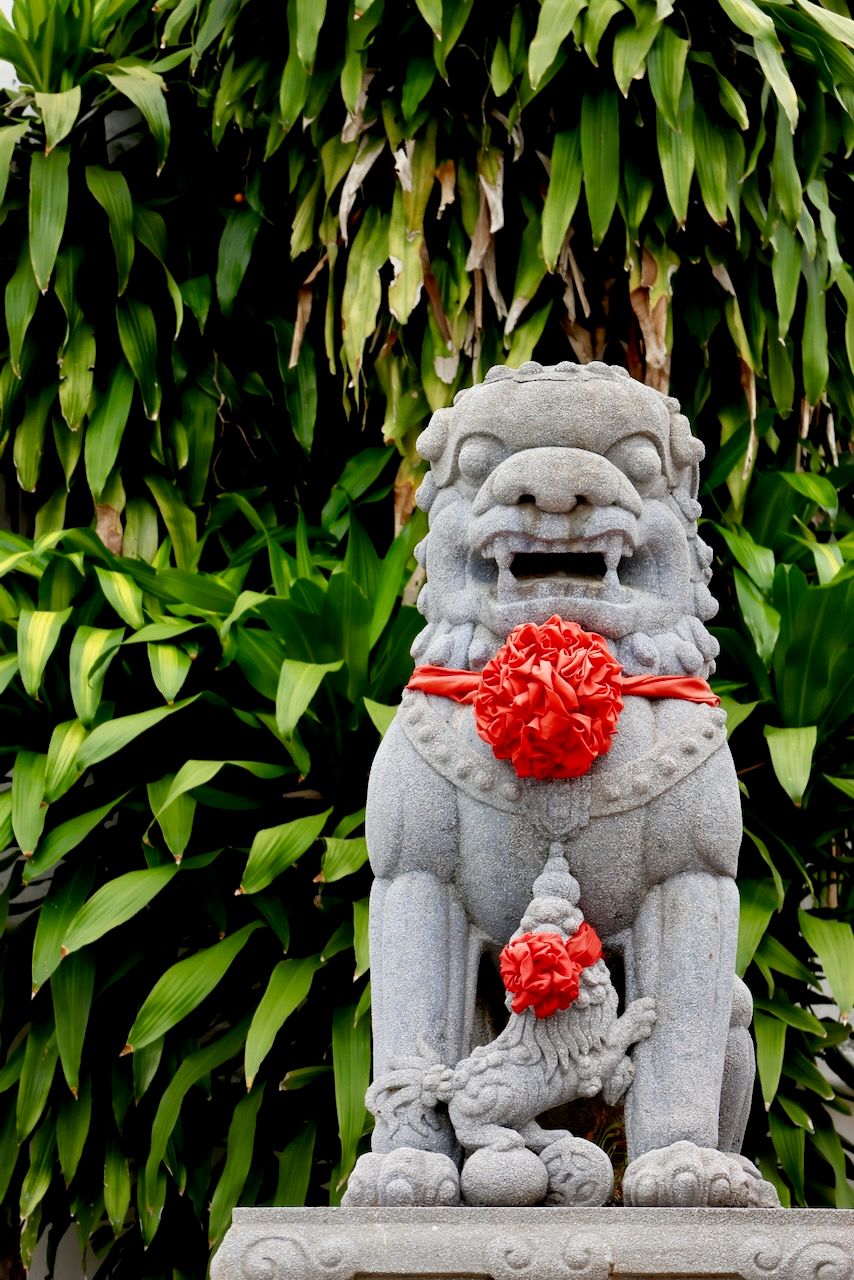
She's got an eye for a good composition, spotting this lion statue in the courtyard of the Fujian Assembly Hall, which I'd walked right past.
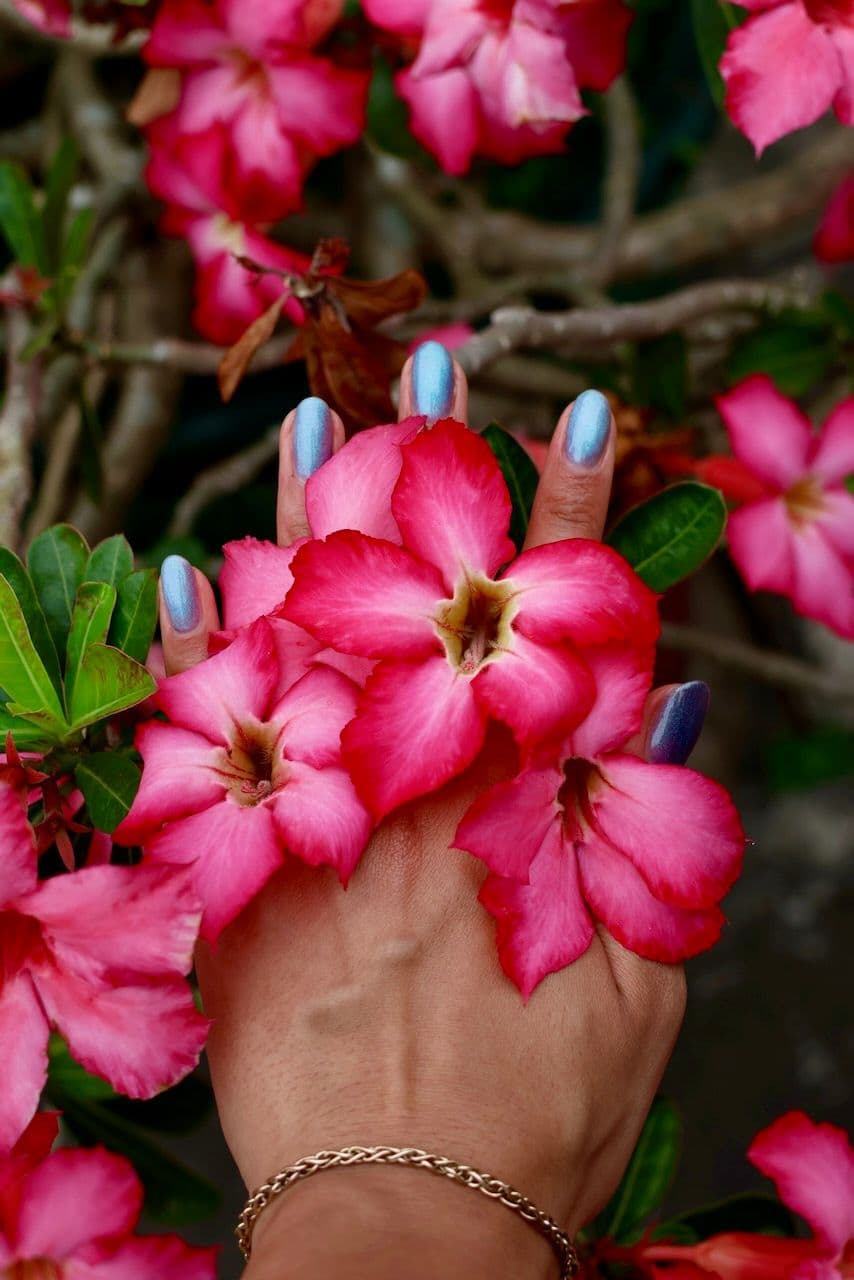
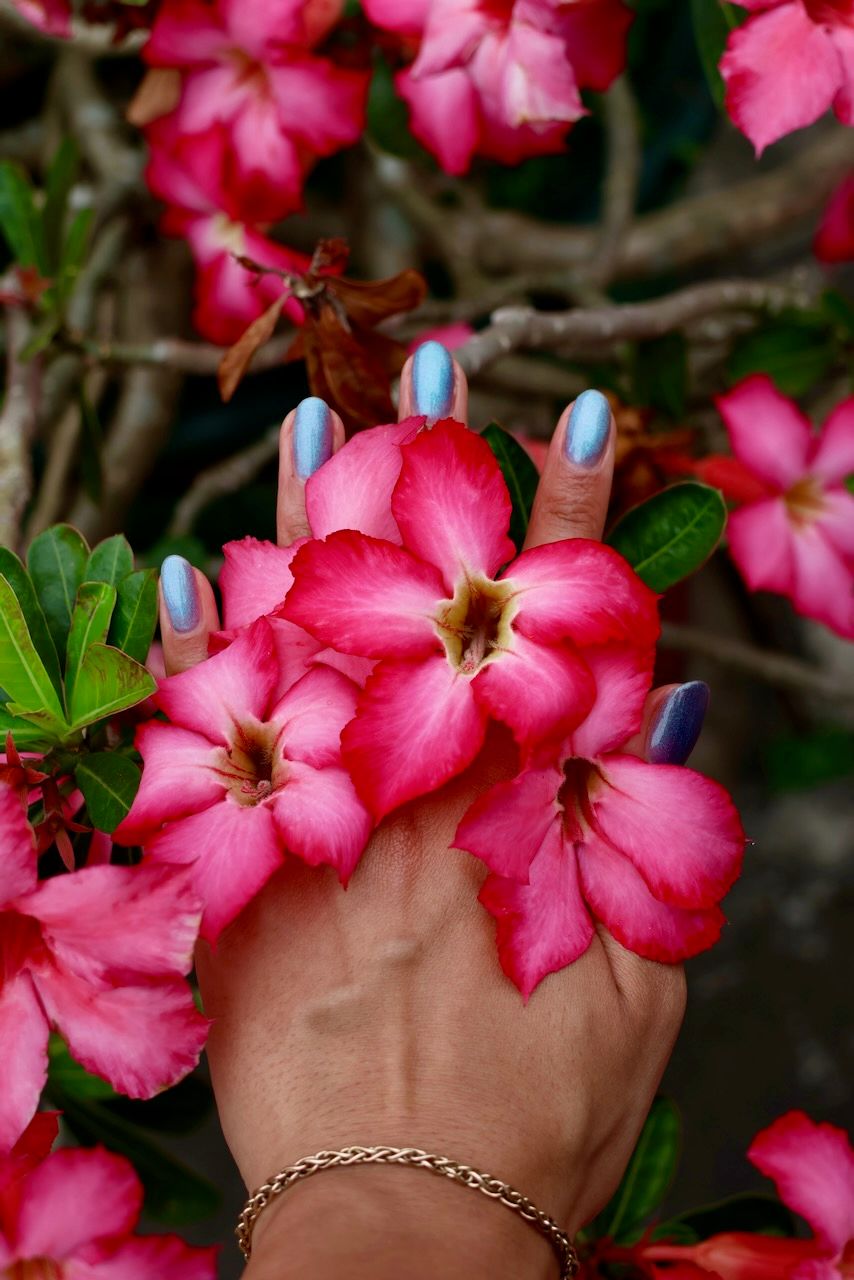
The beauty of the architecture is complemented by the beauty of the flora on every street, including these vibrant pink flowers which I've learned are called "Desert Rose".
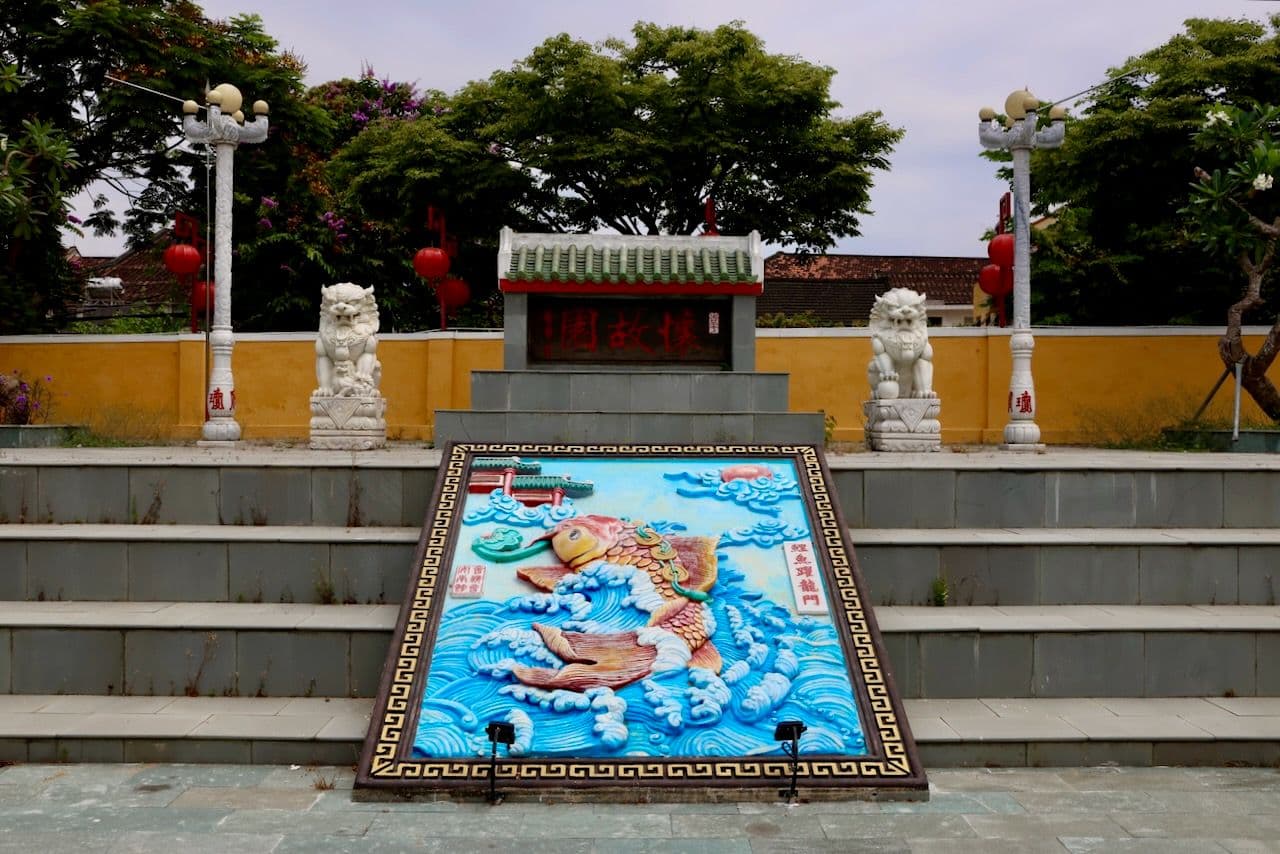
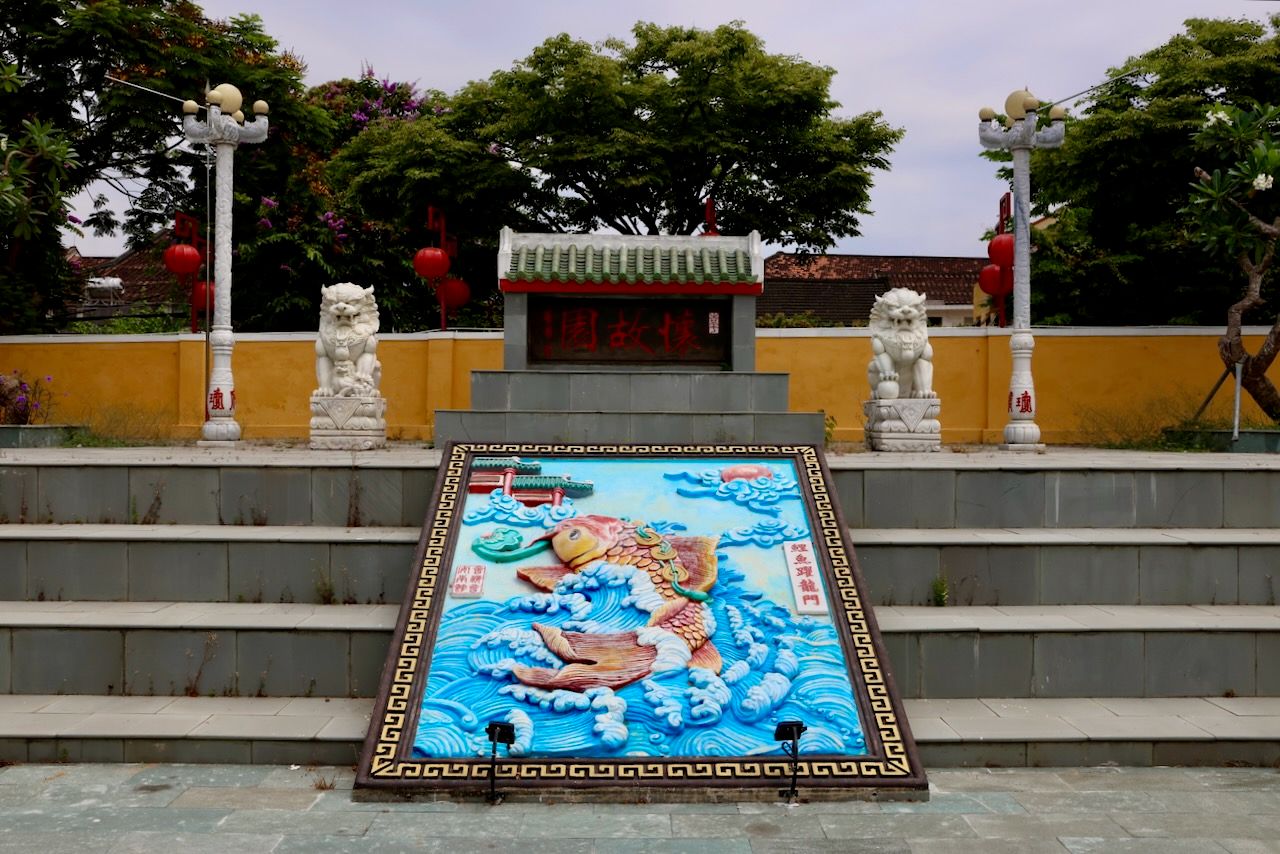
Once I took the camera back, I just had to find more symmetry. This relief - a type of 3D painting popular across temples in Hoi An - was so strikingly blue in an otherwise grey, red and yellow courtyard that I had to take a picture. It depicts a carp leaping over the Dragon Gate, a famous Chinese legend where a carp swims upstream and leaps over the Dragon Gate, to transform into a dragon. It symbolizes perseverance and achieving educational or career success through hard work.
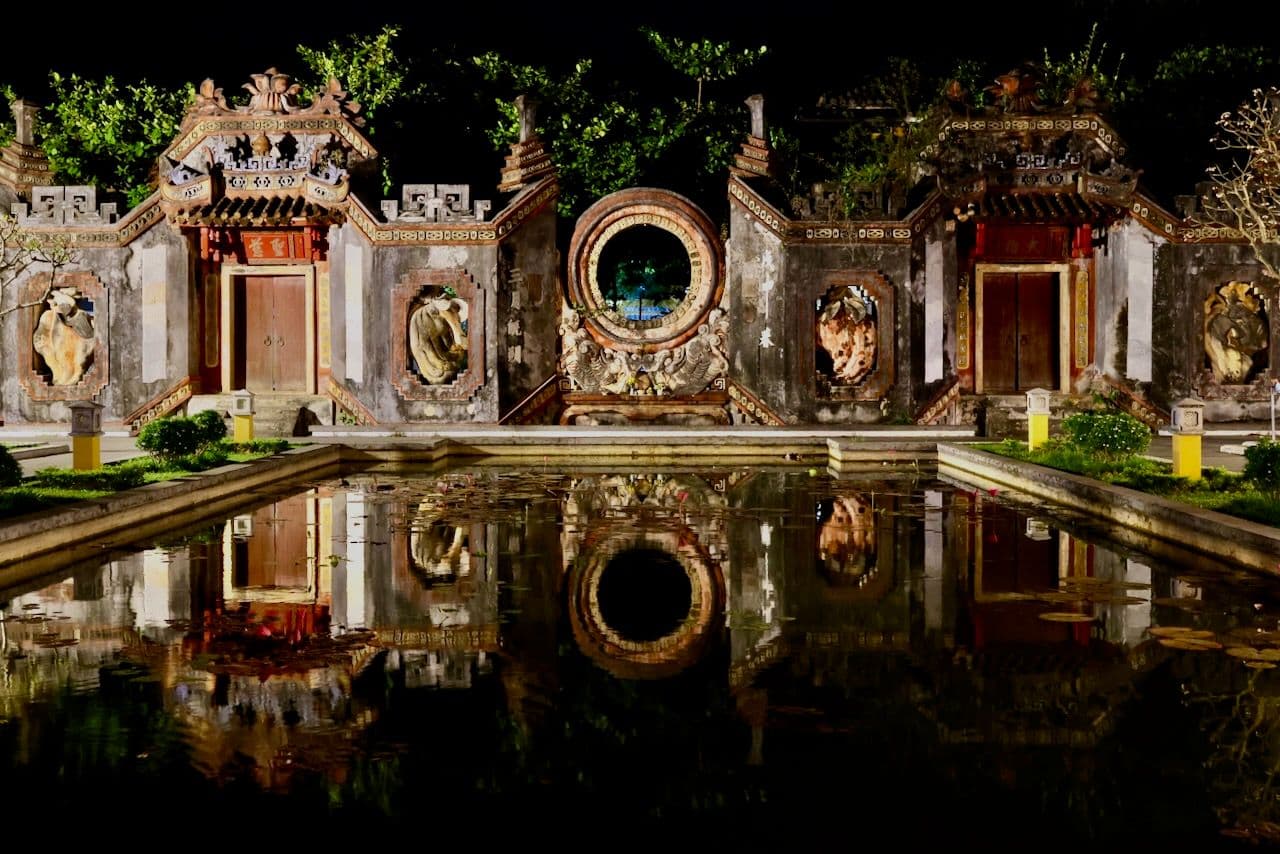
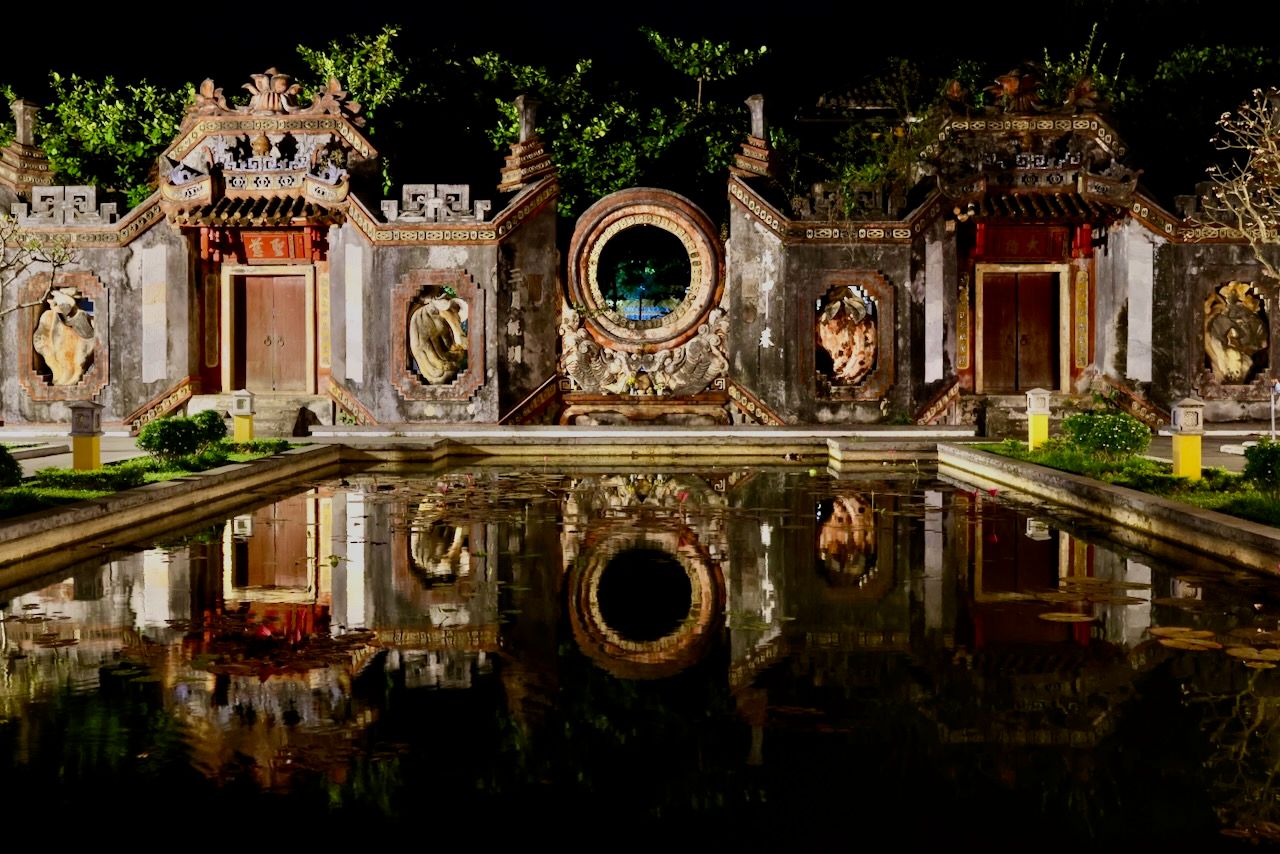
Finishing my series of symmetrical architecture images is the Ba Mu Temple Gate, built exactly 400 years ago in 1626 and with a reflecting pool in front as though it were made to be photographed.
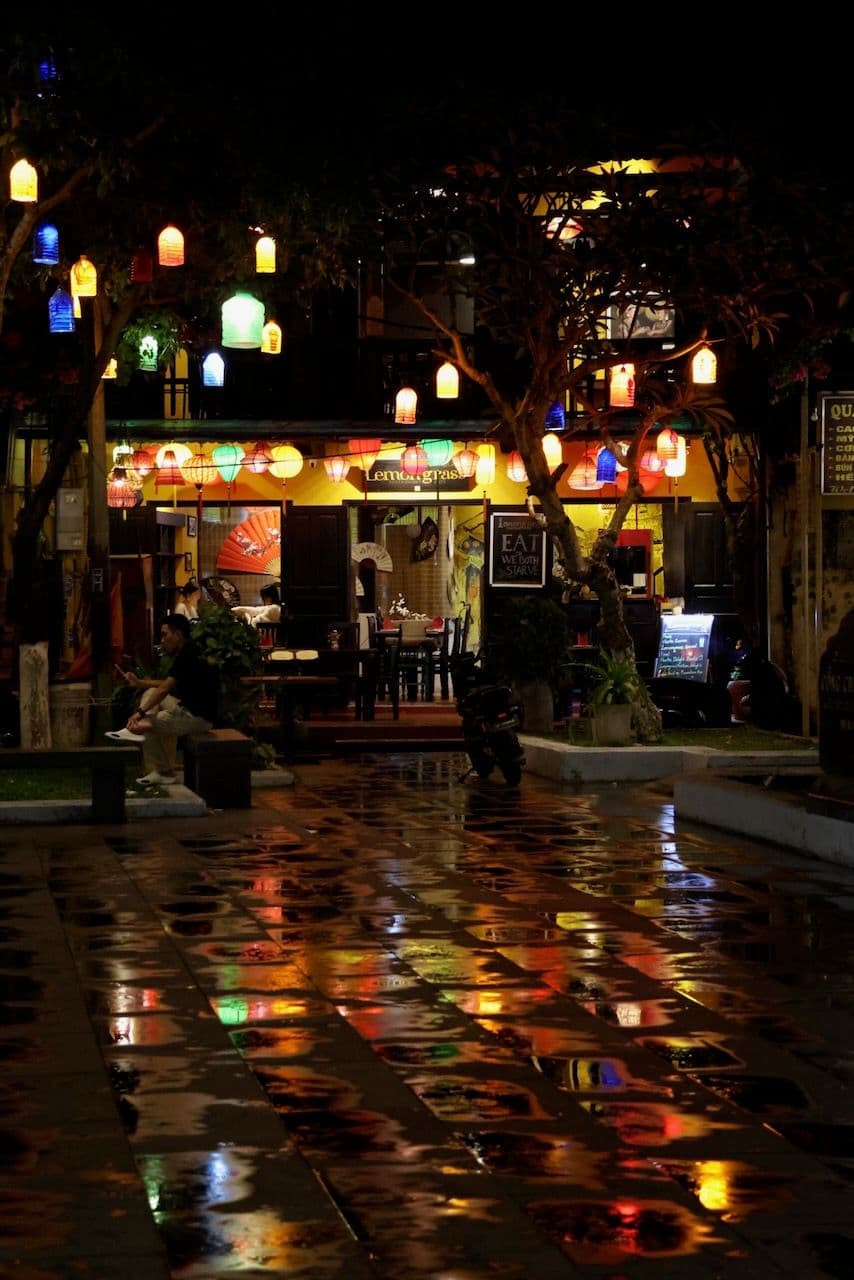
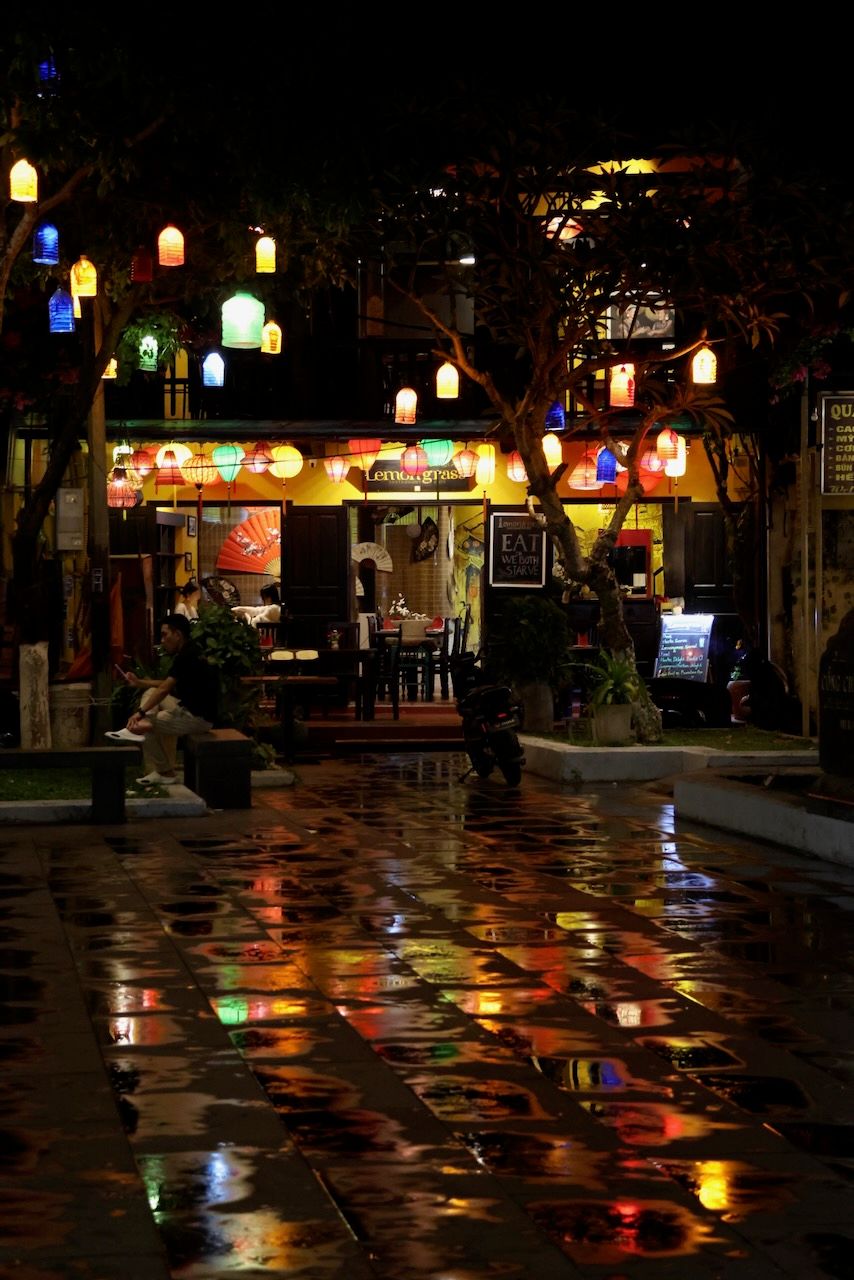
Hoi An is famed for a variety of arts, but the most well-known and pervasive of these is lantern making. Right in front of the Ba Mu Temple Gate, after a short rainy spell I noticed how the ground reflected the dizzying array of colourful lanterns around this cafe.
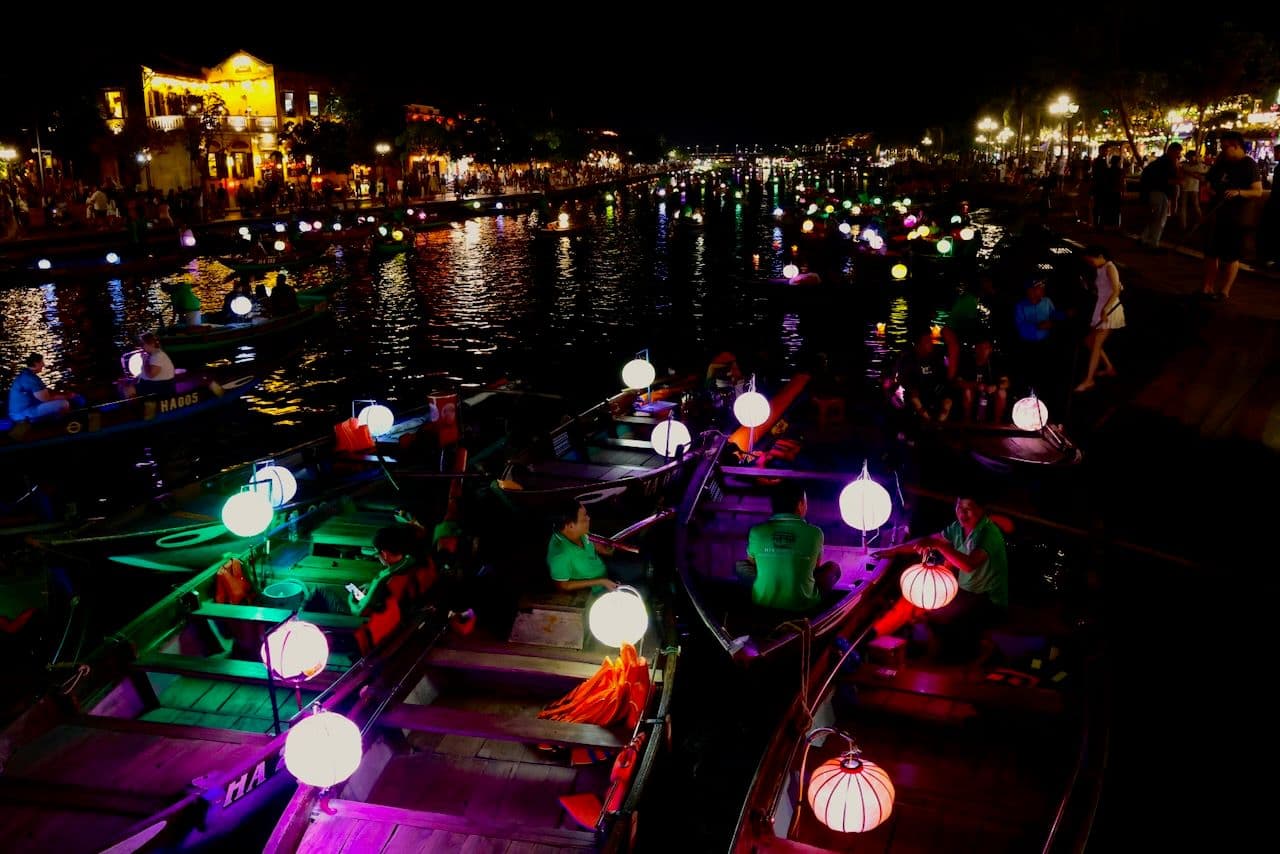
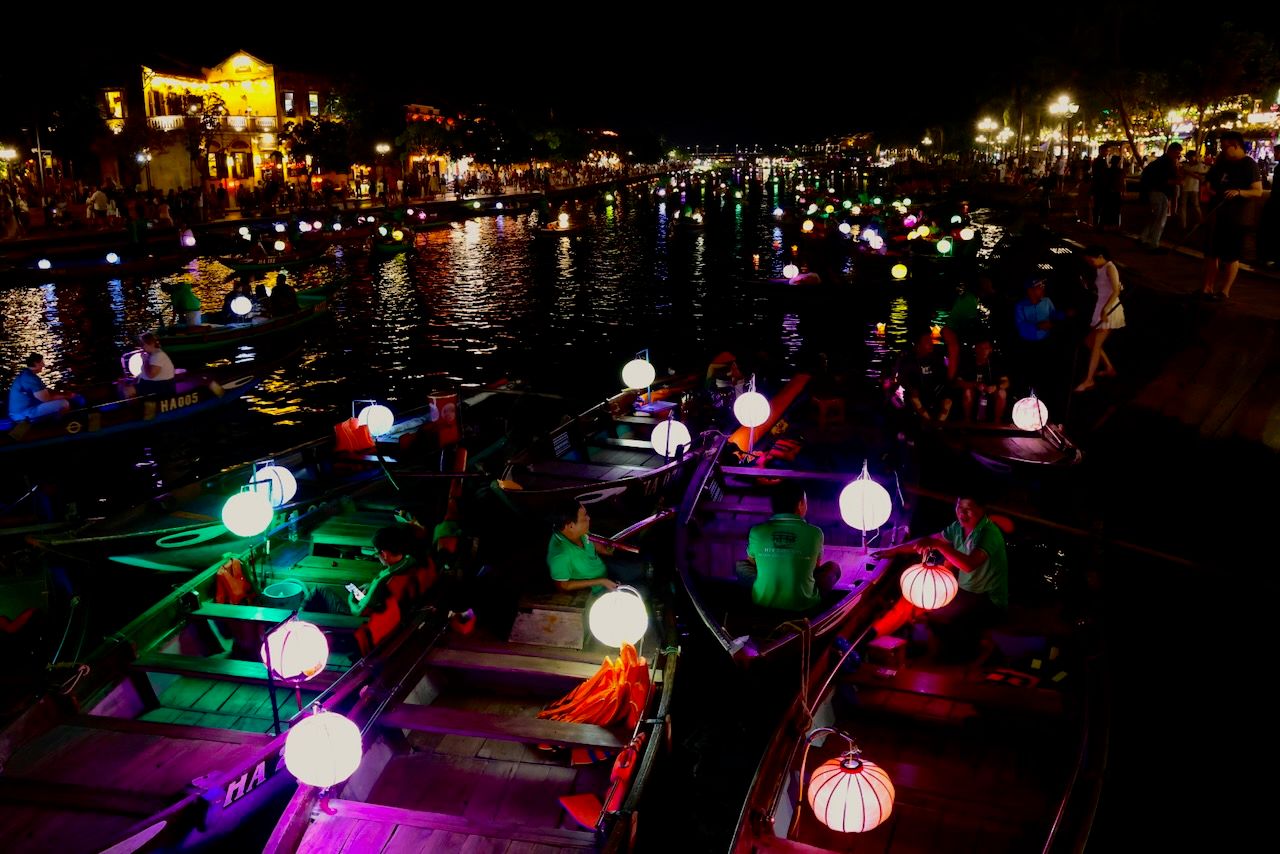
If you're ever in Hoi An Ancient City at night, it's impossible to miss the lantern boats; the entire river is aglow with every shade of lantern as far as the eye can see.
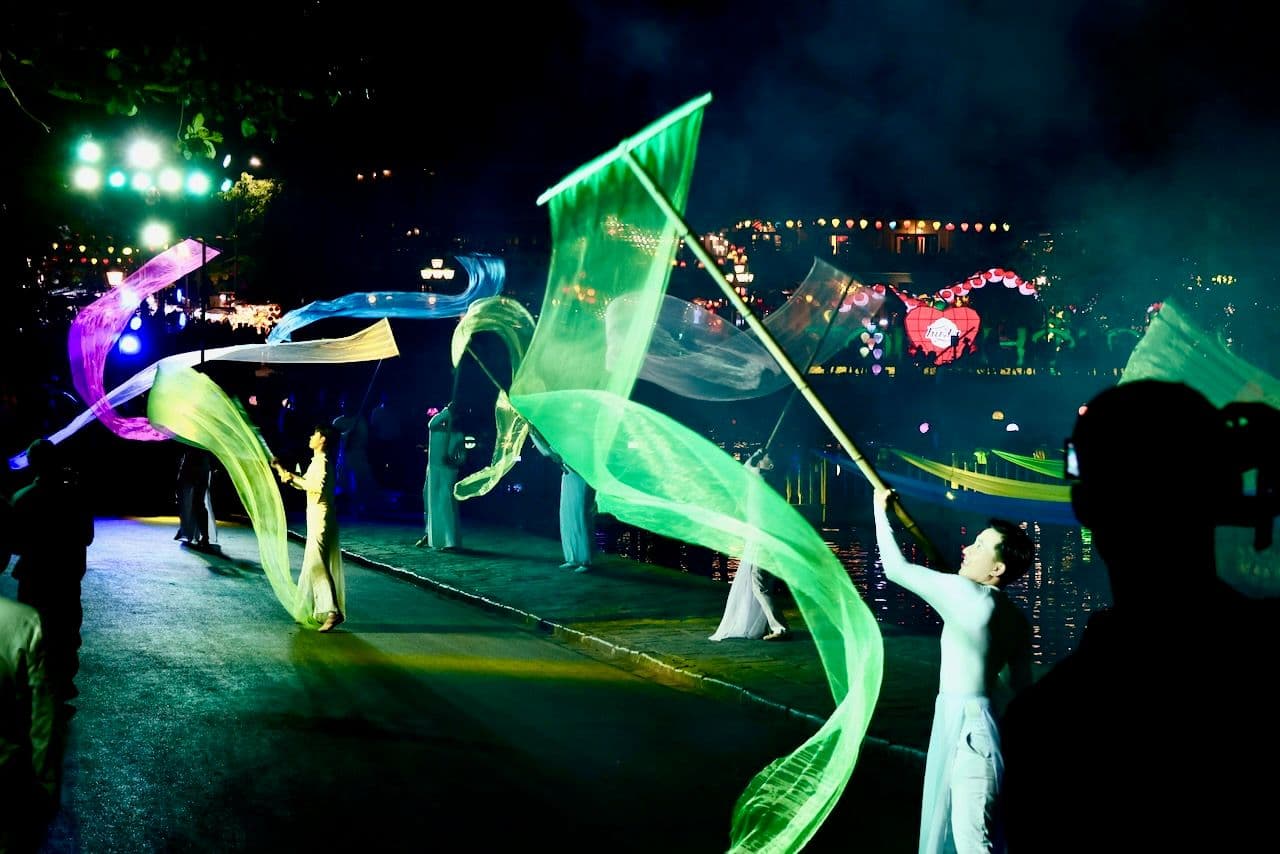
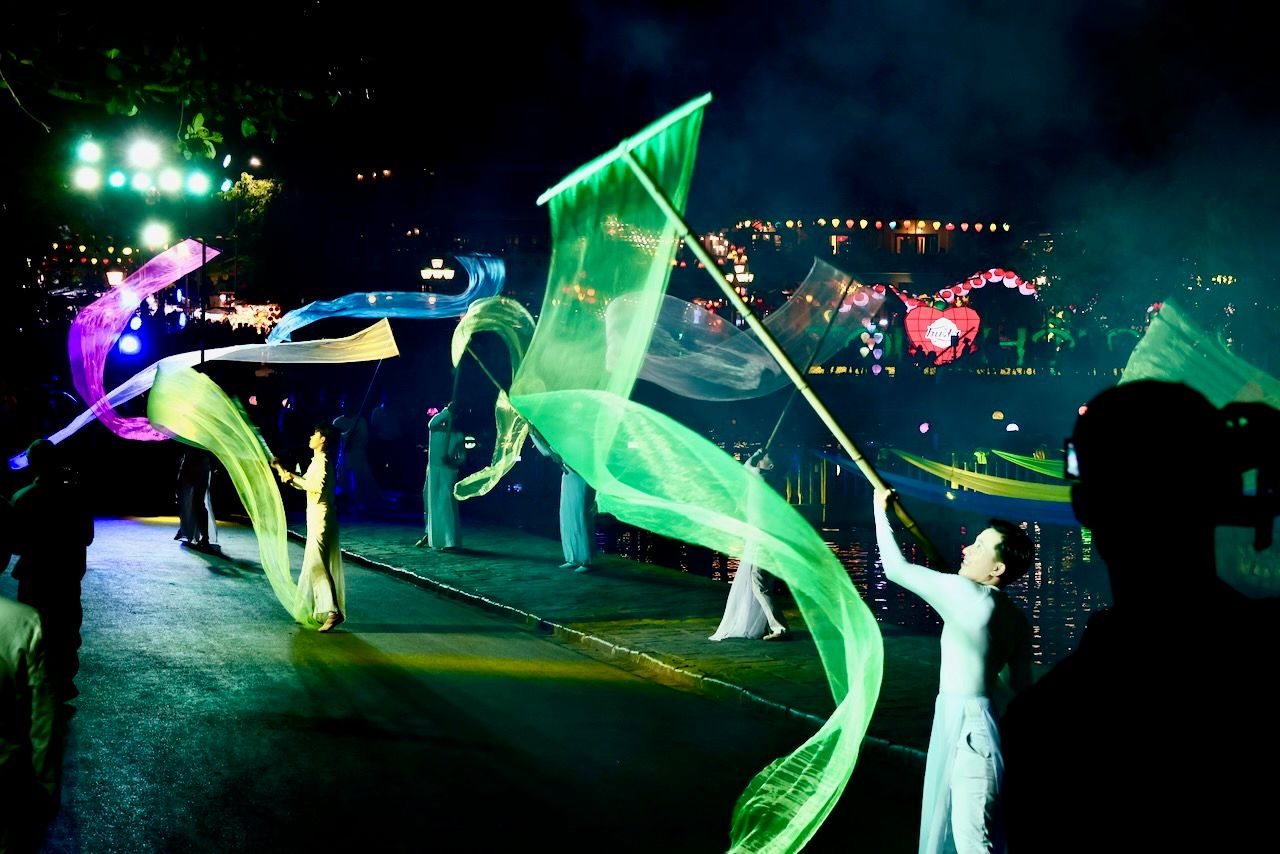
We were lucky to be in Hoi An for the "Colours of Silk" performance by the Japanese Covered Bridge, an artistic showcase telling the history of Hoi An's heritage in silk weaving and lantern making.
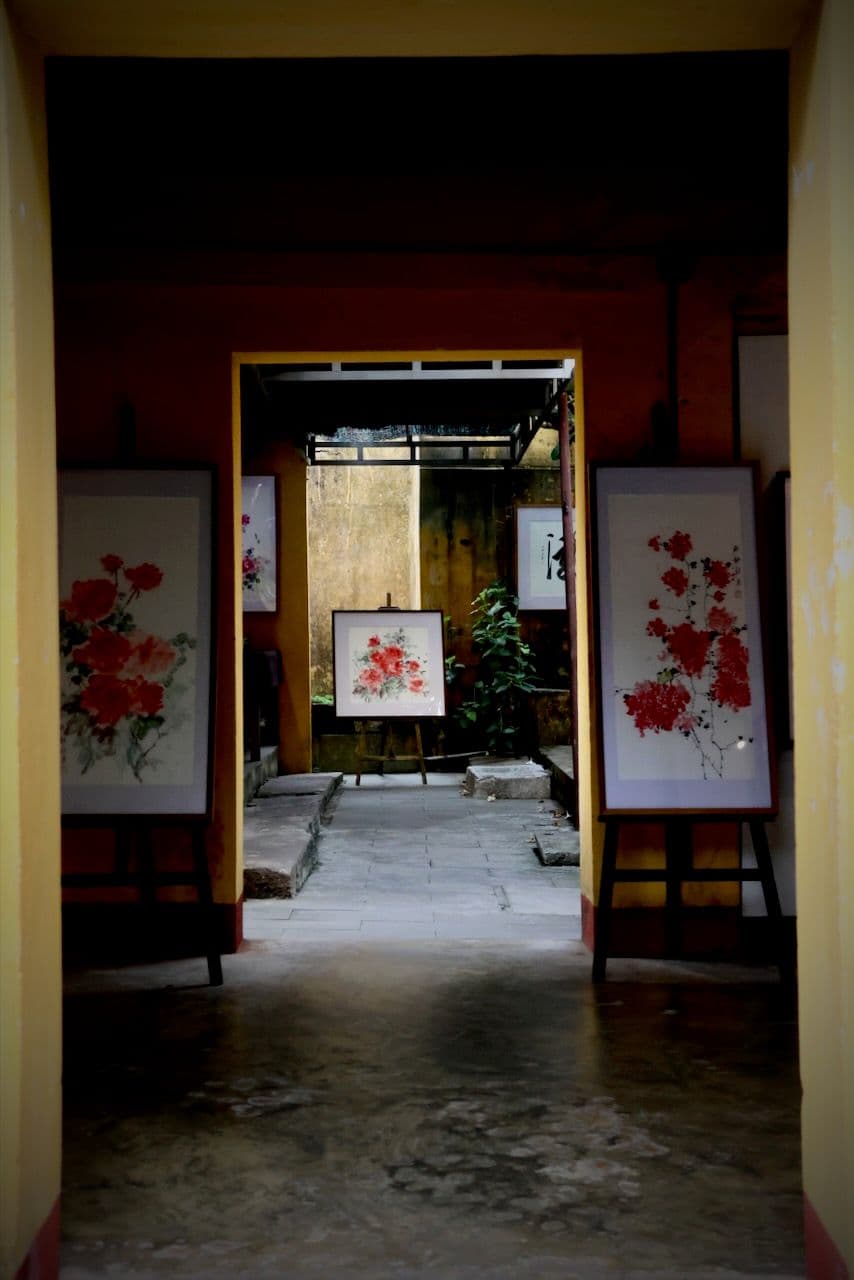
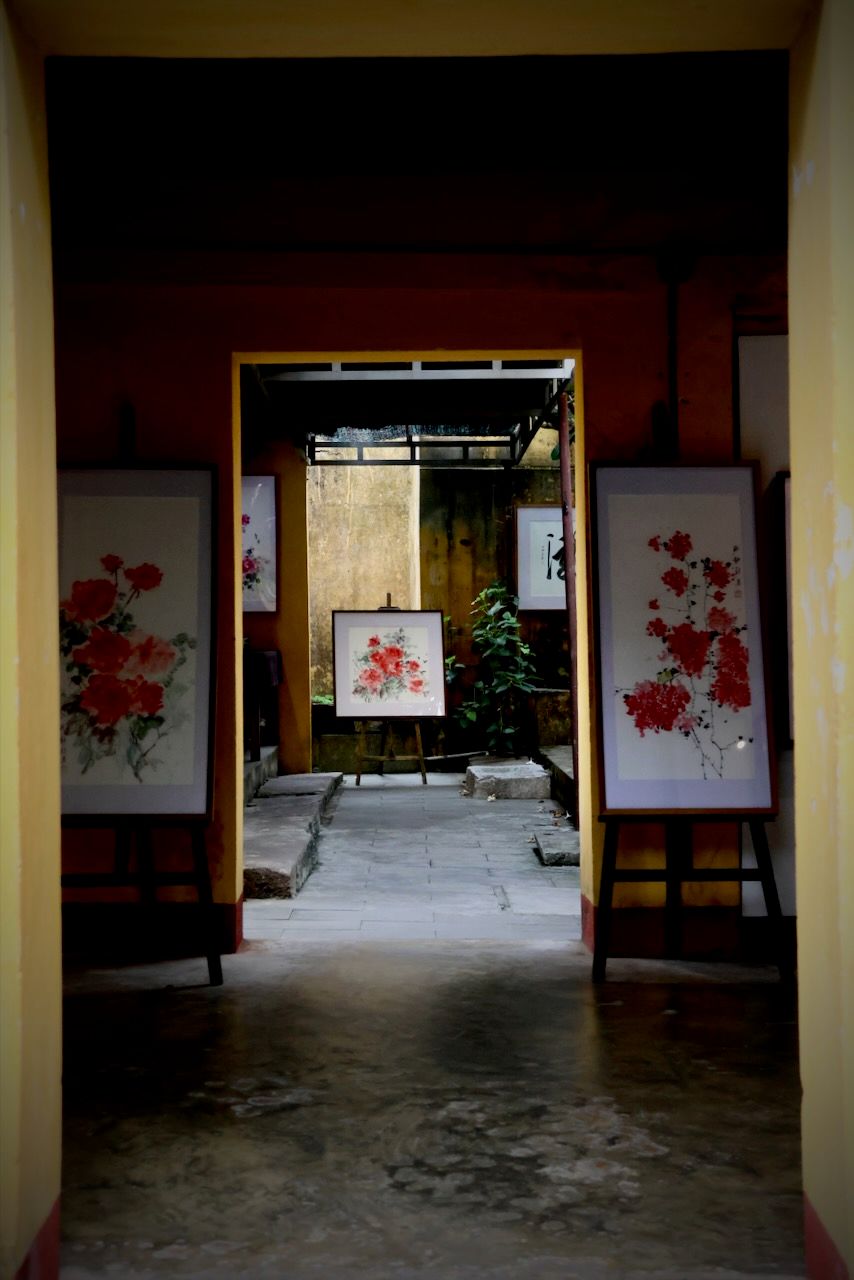
Artwork old and new is on show all over Hoi An, and we particularly enjoyed how the double doorway framed the artwork in this small gallery.
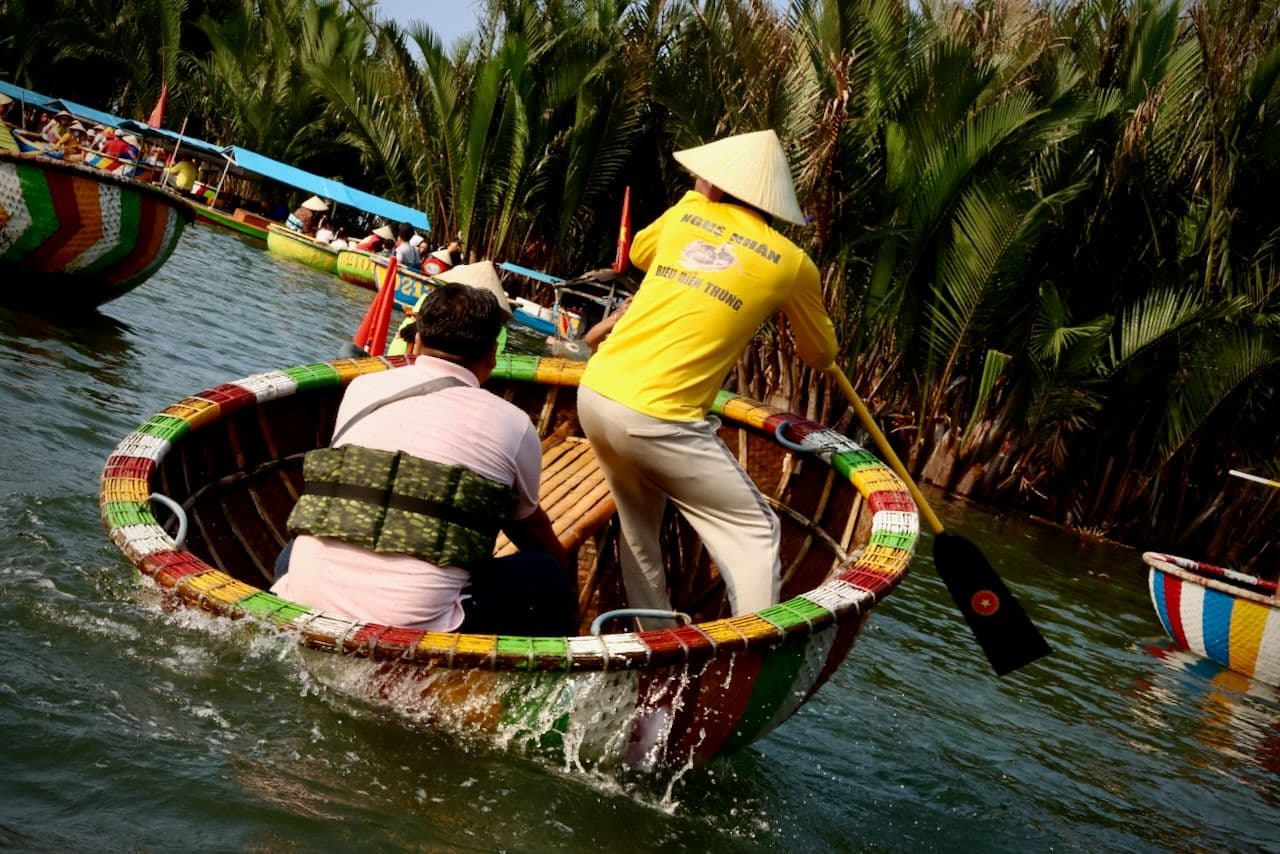
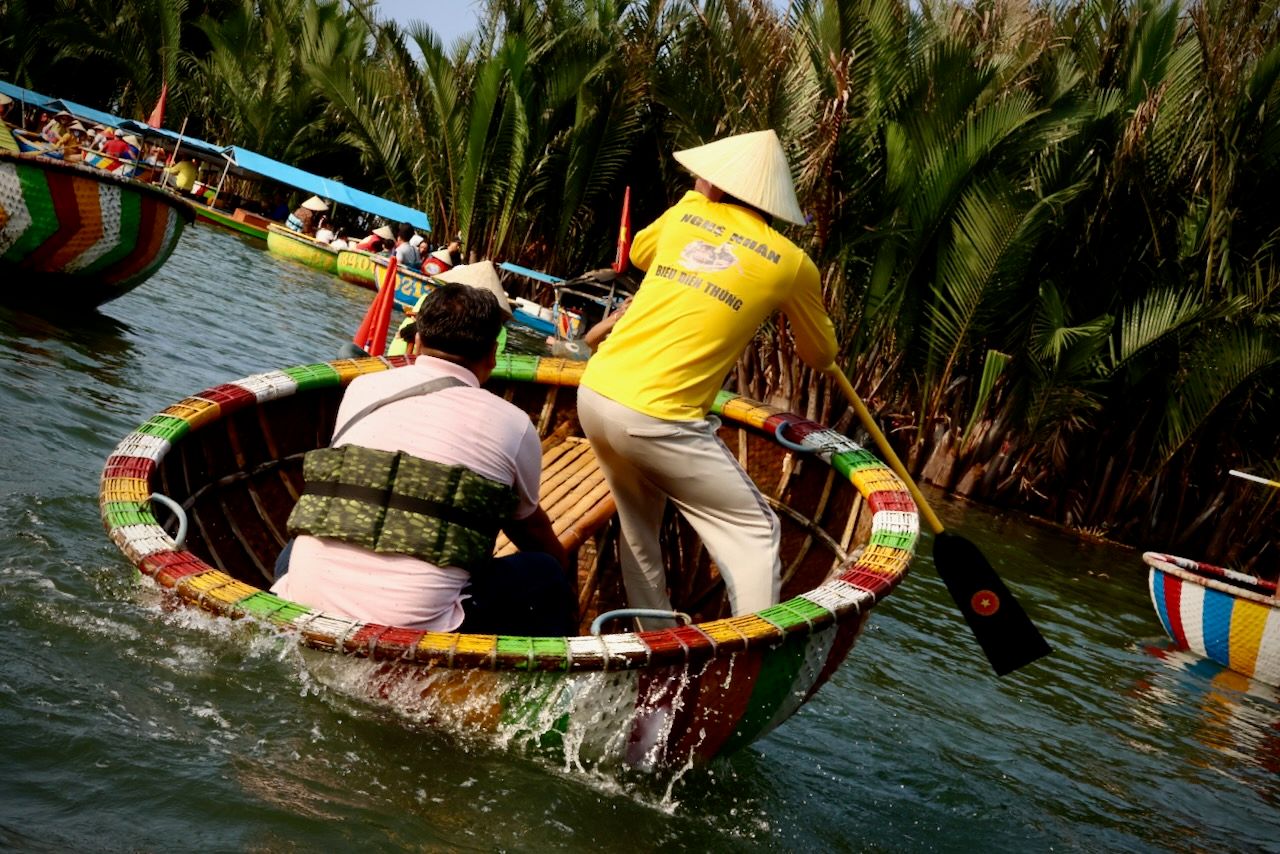
On our final day in Hoi An we fell right into the tourist trap of the basket boats - the famous semispherical boats made from woven bamboo and waterproof resin. It was a peaceful experience that took us through the thick semi-submerged coconut forests.
The experience is most famous on social media for the optional extra of being spun as fast as possible by an experienced boatman while Gangnam Style plays full volume on repeat. We decided to skip that part.
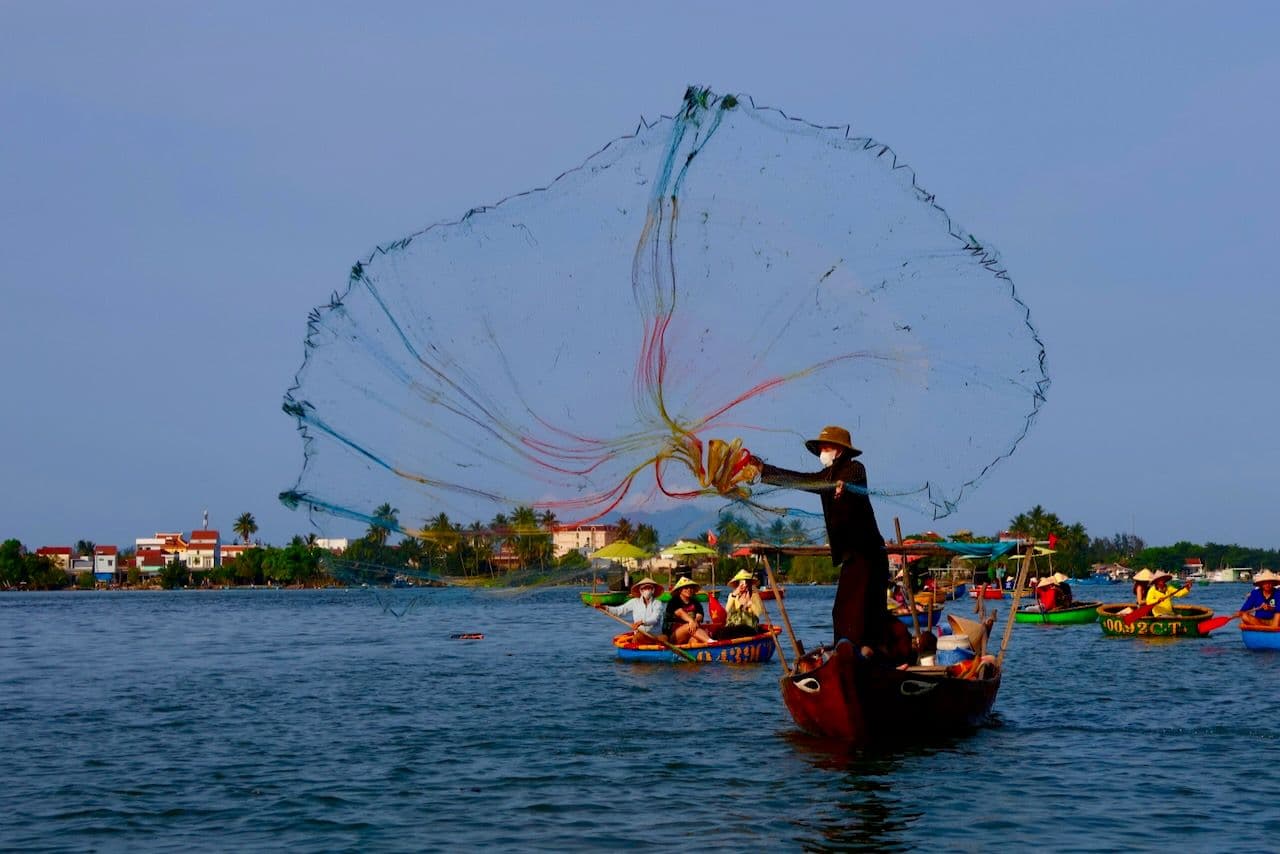
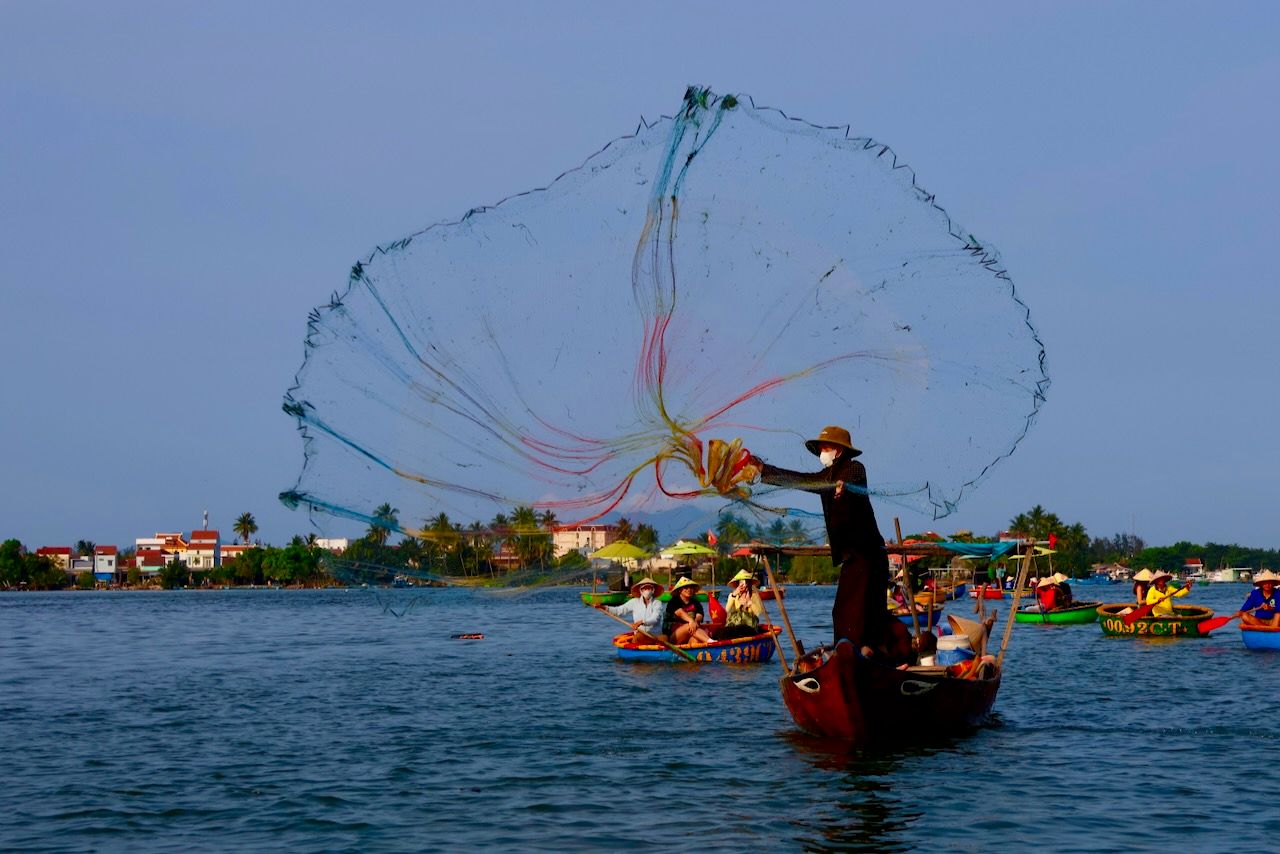
The basket boat tour also included a demonstration of net fishing, which presented a fun opportunity for a shot as the fisherman threw his net.
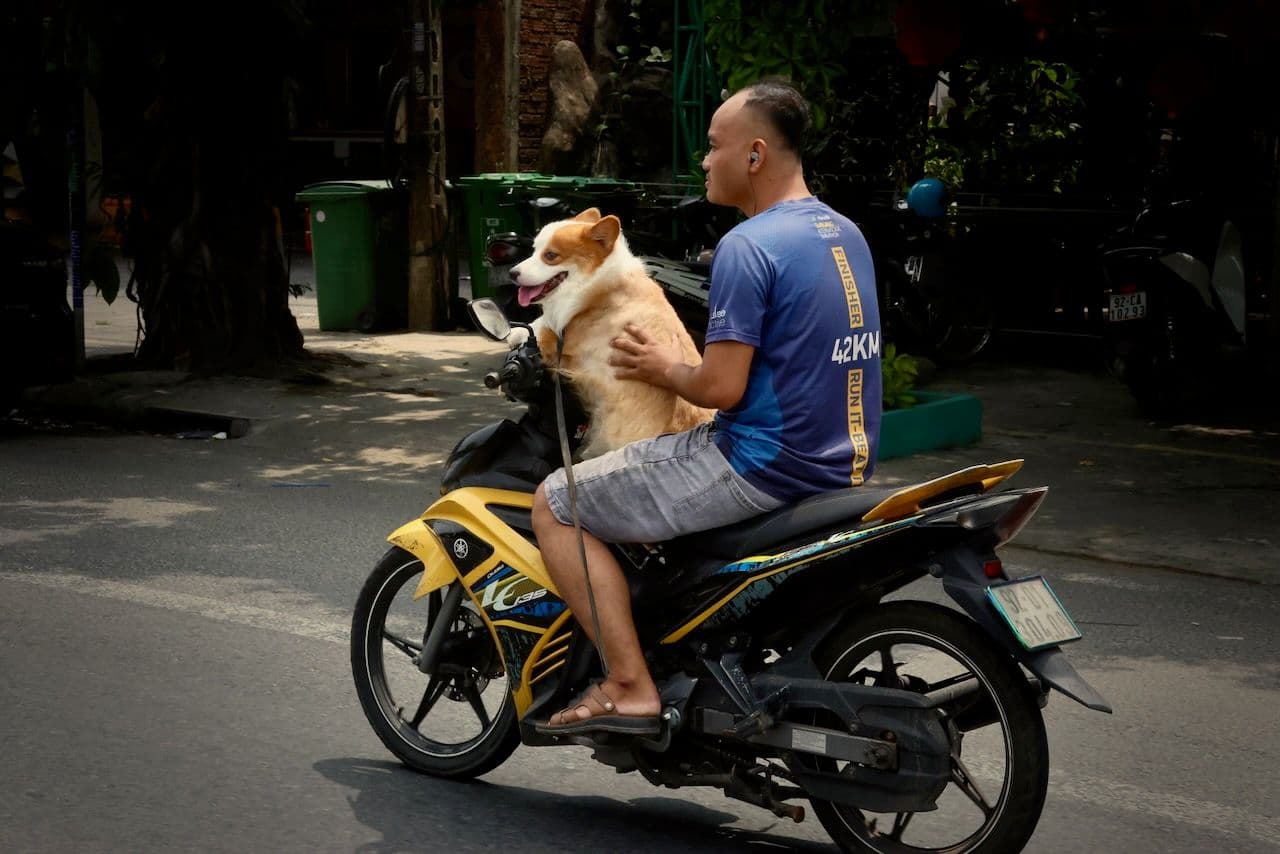
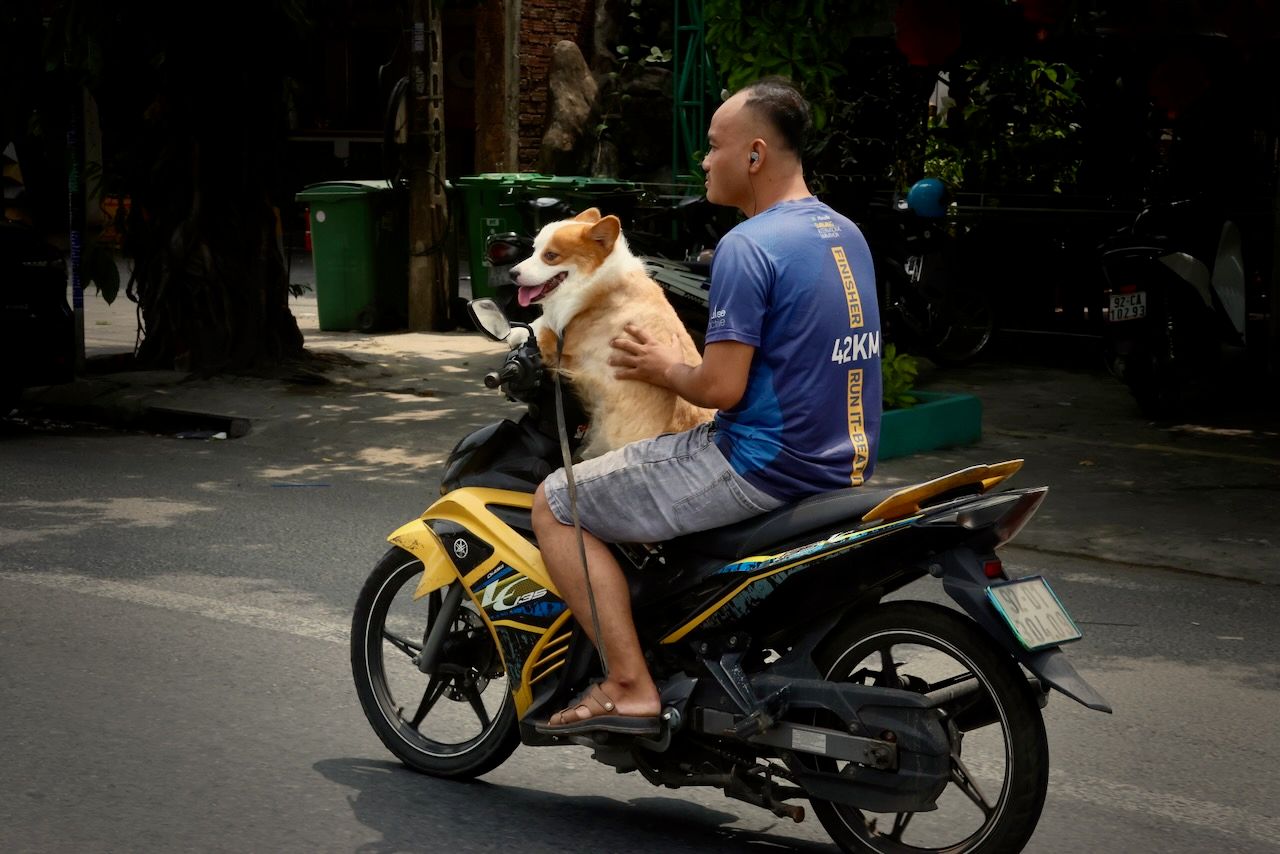
While this final photo doesn't capture Hoi An's ancient culture or architecture, it shows a fun side to the city's modern day culture - dogs riding on mopeds - which I just had to include!
I hope you've enjoyed this journey through Hoi An's rich and diverse cultural landscape. Four days in Hoi An gave us a great overview of the city, but I definitely feel like I could have spent longer there - there was so much more to explore and enjoy.
Next up I'll be changing the format a bit and writing a review of a particularly great cocktail tour we took around the city, so make sure to sign up to the mailing list if you'd like to know when that's published. And as always, if you have any questions or comments on this post, feel free to head to the "Get in Touch" page to send me a message!
Stay in the loop
Want to see future posts?
Drop your email and I'll send you a note whenever I publish something new.
Post Gallery